Solar, batteries and EV chargers for Bangor, Illawong, Alfords Point and Barden Ridge — the whole 2234 postcode. The connection rules here are the same as the rest of the Shire; what decides whether a system pays for itself is the other side of the bill, and that is what this page is about.
6.6kW systems starting from $7,410 (battery prices start from $4,290)
A kWh you use is worth about 6× a kWh you export
Free assessment of your roof, switchboard and current plan
Postcode 2234 sits in Zone 3 (rating 1.382), which sets your rebate
Network approval
We lodge your grid-connection application and confirm your export limit
4.1 kWh
Average daily output per kW of panels in the Sydney region
Sutherland Shire Council
Most rooftop solar on houses here needs no council approval
Solar prices in Bangor
What solar costs in Bangor
These are estimated starting prices, not fixed quotes. Each package starts from the figure shown for a straightforward installation and already has the federal STC discount for postcode 2234 taken off. What your home actually costs depends on your roof, switchboard and connection — we confirm it in writing after a free assessment.
Anything that applies to your home is itemised in your written quote before you commit to it.
Prices start from the figures above, fully installed net payable after the federal STC rebate and including GST for metro areas (regional areas subject to freight and travel costs; T&Cs apply). Checked September 2026. STC figures use postcode 2234, 2026 deeming and an assumed $38 per certificate — the discount you receive depends on the certificate market on your installation date. Savings are modelled on typical usage and tariffs and are not a guarantee.
Tariffs & payback
What a kWh is worth in Bangor
Two different numbers decide what your system is worth, and they are not close to each other. One is what you pay your retailer for a kWh you buy; the other is what they pay you for a kWh you send back. On the figures this site uses for NSW, the gap is about 6 to one — which is why the design question is how much of your own generation you can use, not how much you can sell.
32c
Typical NSW residential usage rate per kWh. Every kWh your home takes straight from the roof is a kWh you do not buy at this price.
5c
Typical NSW feed-in rate per kWh exported. Set by your retailer, not by the network, and it moves — check yours on a recent bill.
≈ 6×
The difference between using a kWh and selling it. It is the strongest argument for shifting daytime loads, and eventually for a battery.
Your retailer is the part you can change any time
The network decides your export limit and you live with it. The feed-in rate is not the network's — it is a retail plan, and you can switch without touching a panel. We will not name a best retailer on a web page, because that answer goes stale; we will show you, at the assessment, what your current plan is actually paying you and what difference a better one would make to the payback we are quoting.
Network rules change and every connection is approved on its own merits — we confirm the limit that applies to your address in writing before install day.
Export limits across the 2234 postcode
The connection rules are identical in Bangor, Menai, Illawong and Alfords Point: up to 10kW per phase on a flexible export connection, 3kW on a fixed one, and a static 1.5kW where the property has no reliable internet. Rather than repeat all of it here, our Menai page sets out those approvals and the NSW Emergency Backstop Mechanism dates in full.
Tariff figures are this site’s indicative NSW averages, last verified 2026-06-22, and are used for modelling rather than quoted as your rate. Your own bill is the only accurate source for what you pay and what you are paid.
Batteries
Adding a battery in Bangor
Home batteries attract two separate incentives. The federal Cheaper Home Batteries Program takes an estimated $3,402 off a 13.5 kWh battery, and NSW’s NSW VPP connection incentive (battery via federal program) can add more on top. Battery prices start from $4,290 fully installed after rebates (incl. GST for metro areas; regional areas subject to freight and travel costs). Already have solar? We check your inverter first — some systems take a battery as they are, others need a hybrid inverter.
≈ $3,402
Estimated federal rebate on 13.5 kWh of usable storage
+ NSW
NSW virtual power plant (VPP) incentive when you connect an eligible battery to a VPP, on top of the federal Cheaper Home Batteries discount. The NSW upfront battery discount ended for installs from 1 July 2025.
Size your solar for it now. Our 10kW package comes pre-wired for a battery and an EV charger, so adding one later is a small job rather than a rebuild.
We review your roof, shading, switchboard and a recent bill — both sides of it, because what you are paid for exports changes what size system makes sense.
Step 2
Written quote
A quote with the panel layout, inverter and every extra itemised — no surprises later.
Step 3
Network approval
We lodge your grid-connection application and confirm your export limit before install day.
Step 4
Installation
CEC-accredited electricians install, test and commission the system, then clean up.
Step 5
Switch-on
Your retailer updates the meter and we set up monitoring, so you can see how much you are using on site rather than exporting.
Our work
Solar systems we have installed
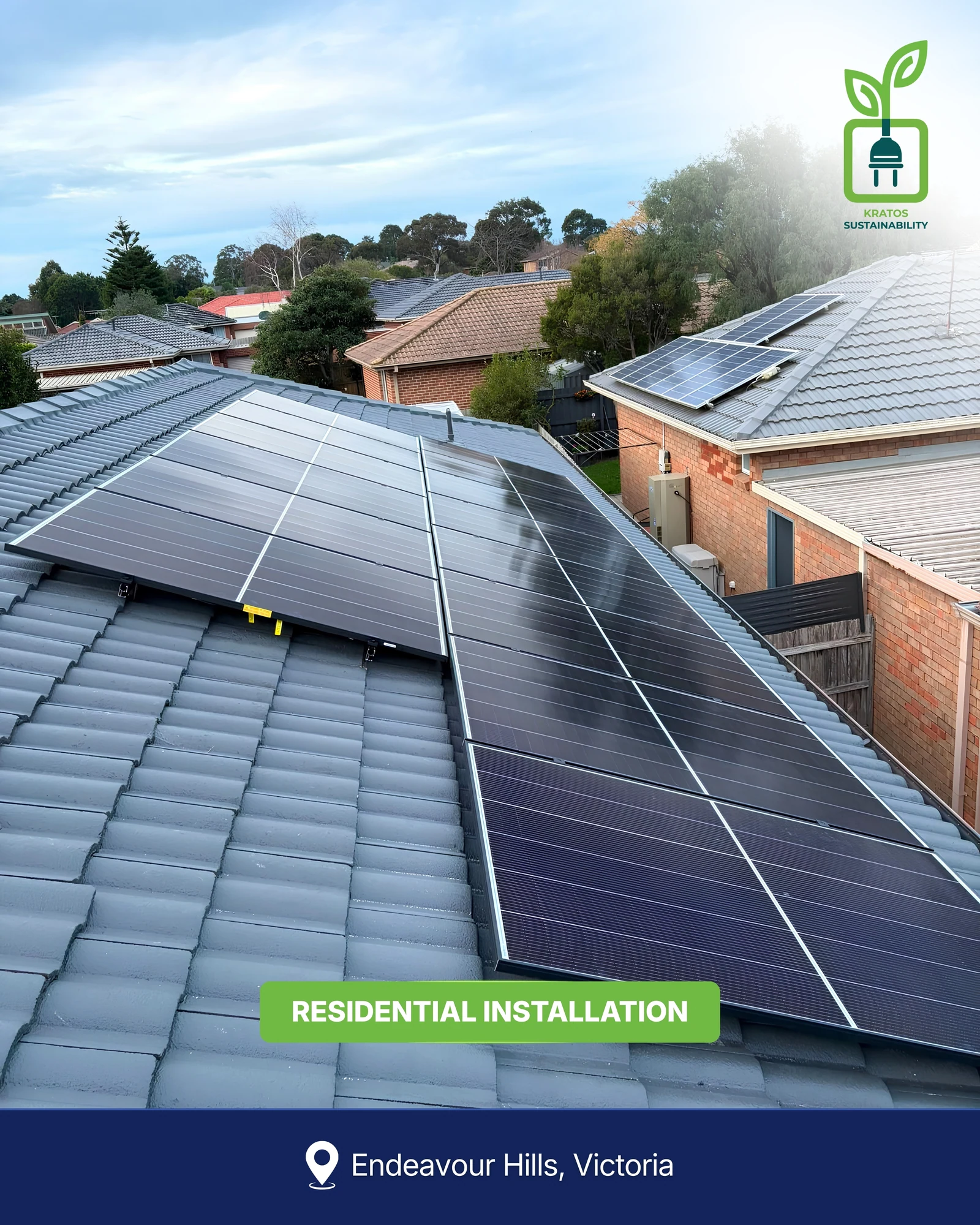
Every install below is a real Kratos job, with the suburb and month it was completed. As we finish work around Bangor, those projects will appear here too.
South AustraliaNov 2026
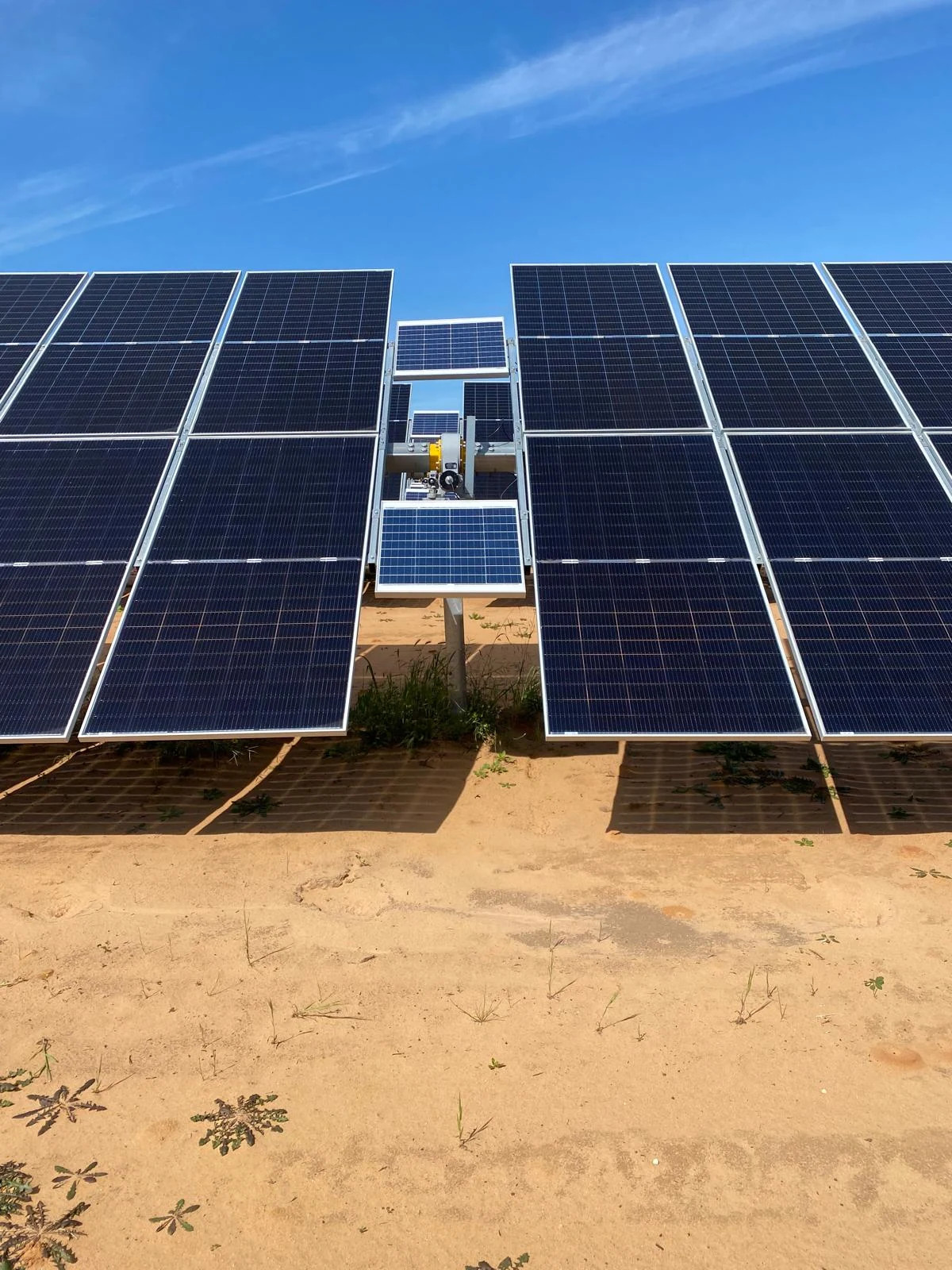
Kratos Energy’s 5 MW Solar Project in South Australia
Kratos Energy’s 5 MW solar project in South Australia showcases renewable energy infrastructure at scale. Featuring ground-mounted solar arrays and dedicated electrical infrastructure, the project forms part of our commitment to developing large-scale solar opportunities across Australia.
The project photographs offer a closer look at the installation—from rows of solar panels to the supporting structures, cabling and electrical equipment behind the system.
Project at a Glance
Project detail
Overview
Location
South Australia
Capacity
5 MW
Project category
Large-scale solar
Installation type
Ground-mounted solar photovoltaic system
Featured infrastructure
Solar arrays, mounting structures, electrical equipment and control panels
A Closer Look at the Solar Installation
The site features rows of elevated solar panels arranged across open land, with access routes between sections of the installation. Ground-mounted systems allow the array layout to be planned around the site’s terrain, available space and maintenance requirements.
The photographs also show the underside of the arrays, including structural supports and cable routing. These less-visible components are an essential part of a solar installation, alongside the panels themselves.
Dedicated electrical enclosures and control equipment highlight the infrastructure required to support a project of this scale. Together, the images provide a practical view of the engineering involved in a large-scale solar site.
Large-Scale Solar Expertise
A solar farm requires coordination across site assessment, engineering, equipment selection, construction and network requirements.
Kratos Energy’s large-scale solar services cover solar farm development, engineering and construction support, grid connection coordination, and operational support. We work with landowners, investors and commercial partners to assess opportunities and progress renewable energy projects.
Explore our project portfolio to discover more of our solar and battery installations.
Discuss Your Next Solar Project
Have land suitable for solar development, a commercial energy requirement or a renewable energy project in mind?
Contact Kratos Energy to discuss your site, objectives and potential next steps.
Call 1300 089 547
“Kratos Energy arranged my solar battery installation, and the entire process went very smoothly. I was kept informed every step of the way. Logan from LJ Electrical arrived on time and completed an excellent installation. He explained everything clearly and even helped me install the monitoring app before leaving.”
Paul Phillips · Google review
“Friendly and professional throughout the entire process. The contractors were trustworthy and kept us well informed from beginning to end.”
As an estimate, a 6.6kW system starts from $7,410, a 10kW system starts from $10,300 and a 13.2kW system starts from $11,250 (with battery prices starting from $4,290), with the STC discount for postcode 2234 already taken off (incl. GST for metro areas; regional areas subject to freight and travel costs). Those are starting estimates for a straightforward install, not a fixed price — your written quote confirms the number once we have seen your roof, switchboard and connection.
What solar rebate can I get in Bangor (2234)?
Bangor is in STC Zone 3, rating 1.382. In 2026 a 6.6kW system creates 45 certificates, worth roughly $1,710 off the price, and a 10kW system 69 certificates, roughly $2,622. The discount shrinks each January until the scheme ends in 2030, and the exact amount depends on the certificate market on your installation date.
Which retailer pays the best solar feed-in tariff?
We deliberately don't answer that with a name, because the answer changes and we would be wrong within months. What is worth knowing is the shape of it: on the figures we use across this site, a typical NSW household pays around 32c for a kWh it buys and is paid around 5c for a kWh it exports — roughly 6 times more value in using your own generation than in selling it. A headline feed-in rate is also often paired with higher usage rates, so compare the whole plan rather than the one number. Your retailer is your choice and you can change it any time without touching the system.
So is a bigger system still worth it if the feed-in rate is low?
Usually yes, but for a different reason than people expect. A larger array does not just export more — it covers more of your own load through more of the day, including cloudy mornings and winter afternoons when a small system produces very little. The extra panels are also the cheapest part of the job, because the labour, the scaffolding, the inverter and the paperwork barely change between 6.6kW and 10kW. What a low feed-in rate really argues for is using more of it yourself: shifting the dishwasher, the washing machine and the pool pump into daylight, and eventually a battery.
Should I wait for feed-in tariffs to improve?
We would not. The long-term trend across the market has been downward as more rooftop solar has been installed, not upward, and every year you wait is a year of bills you have already paid. The rebate works against waiting too: the STC discount steps down each January until the scheme ends in 2030, so the same system costs a little more each year. If there is a reason to wait in your case — a roof due for replacement, a house you are selling — we will tell you.
How much solar can I export in Bangor?
On a flexible export connection, a complying system up to 30kW is automatically approved to export up to 10kW per phase. On a fixed export connection, the approval is 3kW per system. The rules are the same across the 2234 postcode, and the NSW Emergency Backstop Mechanism is being phased in by postcode from 30 November 2026 with full implementation by 22 February 2027 — our Menai page covers that in detail.
Do you install in Illawong and Alfords Point too?
Yes. We cover the whole 2234 postcode, including Illawong, Alfords Point, Barden Ridge, as well as Menai. The pricing, the process and the connection paperwork are the same right across it.