

Home solar batteries, working after sunset.
A home battery stores the power your panels make during the day so you can use it at night — slashing your grid reliance and keeping you on during blackouts.
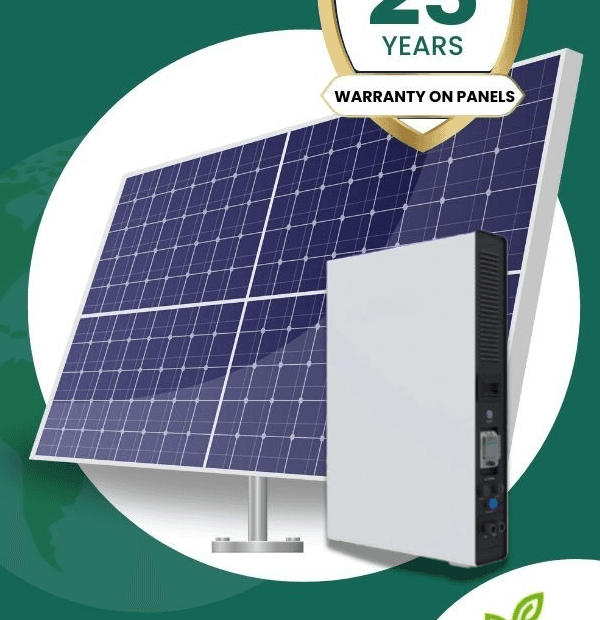
More independence, lower bills.
Use solar after dark
Store excess daytime generation and run your home through the evening on your own solar.
Blackout protection
Keep chosen circuits running during grid outages — with a backup-capable battery and inverter.
Bigger bill savings
Stop exporting cheaply in the afternoon and buying back expensively after sunset.
EV & smart ready
Charge your car from stored solar and manage the whole system from one app.
Premium, CEC-approved storage.
Battery brands we install


How the Cheaper Home Batteries rebate works
The federal discount is paid through small-scale technology certificates (STCs) under the same scheme as the solar rebate. The installer or a registered agent creates the certificates and takes the value off your price, so you see it as a discount on the quote rather than a cheque later. Two details decide how much you get: the battery's usable capacity, and the date it is installed.
Usable kWh, not the label
A battery's nominal capacity is what the cells hold; usable capacity is what you can actually draw out. A 10 kWh battery that allows 90% depth of discharge gives you 9 kWh usable — and the discount is worked out on the 9. The Clean Energy Council's approved battery list publishes both numbers for every eligible product.
To qualify, each battery must be 5 to 100 kWh nominal, on the approved list, able to join a virtual power plant, and installed by an accredited installer with a battery endorsement. Only the first 50 kWh of usable capacity earns certificates.
Three tiers since 1 May 2026
The certificate rate tapers as the battery gets bigger. For installs between May and December 2026, the factor is 6.8 STCs per usable kWh, which works out to about $252 per kWh at the full rate on current certificate prices:
- First 14 kWh usable: full rate
- 14 to 28 kWh: 60% of the rate
- 28 to 50 kWh: 15% of the rate
- Above 50 kWh usable: nothing
The factor falls to 5.7 on 1 January 2027 and keeps stepping down every six months to the end of 2030. It is your installation date that counts, not the date you sign.
| Usable kWh | Estimated discount | Per kWh |
|---|---|---|
| 10 kWh | $2,520 | $252 |
| 16 kWh | $3,830 | $239 |
| 24 kWh | $5,040 | $210 |
| 32 kWh | $5,796 | $181 |
Worked example: 24 kWh usable
- First 14 kWh: 14 kWh × $252$3,528
- 14 – 28 kWh: 10 kWh × $151$1,512
- Total$5,040
Notice how the per-kWh value drops as the battery grows. Past about 28 kWh usable, each extra kWh earns very little discount, so a very large battery has to justify itself on your usage alone.
A few rules people miss. Only one battery system per premises (one per meter) can claim certificates, so it is worth sizing it properly the first time. If you later add modules to a stackable battery, only the new modules can claim, and they must add at least 5 kWh. The battery also has to stay at the property until the end of 2030 or the end of its warranty, whichever is later. Run your own numbers in the battery rebate calculator, or see every scheme on the rebates page.
Estimate only — not a quote. Discounts use the current STC factor and an assumed certificate price; the amount on your quote depends on the certificate market and your installation date.
The NSW battery incentive now, and whether to join a VPP
NSW stepped back from upfront battery discounts for houses once the federal program started. What is left is a payment for joining a virtual power plant — worth understanding before you sign a contract that ties your battery to one.
What changed
The NSW home battery installation discount only applied to batteries installed before 1 July 2025, and it cannot be combined with the federal discount. Homes installing now get the federal discount instead, which is larger.
The NSW VPP incentive
An upfront payment for connecting an eligible battery (above 2 kWh and up to 50 kWh) to a participating VPP. It is calculated on the capacity you make available to the grid, capped at 28 kWh, the amount varies by provider, and it can be claimed once per meter. It can sit on top of the federal discount. Apartment buildings are excluded.
The trade-off
In a VPP, the operator occasionally discharges your battery when the grid needs it, on the terms in their contract. Most offers are tied to a retailer, so read the plan as well as the battery terms: the rates, how long you are locked in, any exit fee, and whether you can keep a reserve for blackouts.
The battery must be VPP-capable to get the federal discount, but joining is optional. If the VPP payment and plan beat the best non-VPP plan for your usage, join; if not, you lose nothing by staying out. The current rules are on the NSW Government energy site. VIC and ACT homes get the same federal discount; their own state and territory help is listed on our rebates page.
What blackout backup really covers
This is the most oversold part of a battery quote. Having a battery does not, on its own, keep the lights on.
Why solar goes off in a blackout
Grid-connected inverters must shut down when the grid fails so they don't feed power into lines that workers think are dead. This is called anti-islanding, and it applies to solar with or without a battery. A backup system gets around it by disconnecting your home from the grid first and then running it as its own island.
That takes a battery designed for backup, an inverter or backup gateway that supports it, and wiring that isolates the house. The isolation hardware is usually an extra cost, and it should be itemised on the quote.
Whole home or essential circuits
- Whole-home backup runs everything, but air-conditioning, ovens and hot water drain the battery fast and can exceed what the inverter can supply.
- Essential-circuit backup moves lights, fridge, Wi-Fi and some power points onto a separate board, so the battery lasts much longer.
- Three-phase homes: a single-phase battery or hybrid inverter only backs up circuits on the phase it is connected to.
- Medical equipment: a home battery is not a substitute for proper medical backup — get specialist advice.
Questions to put to any installer: which circuits will be backed up, how much power (kW) the system can supply in backup mode, how quickly it switches over, how much charge it keeps in reserve for an outage, and whether the solar will keep recharging the battery during a long one. Get the answers written into the quote.
Sizing a home battery from your evening usage
A battery earns its keep by covering the hours your panels can't: late afternoon, evening and overnight. Size it to that window, and to how much spare solar you have to refill it.
1. Find your evening number
Your retailer's smart meter data shows usage by half hour. Add up a typical day from about 4pm to 7am. That figure, not your daily total, is the usable capacity to aim for. Average a few weeks in winter and summer, because heating and cooling change it.
2. Check the solar can refill it
In the Sydney region, a 6.6kW system averages around 27 kWh a day across the year, less in winter. Daytime use comes first, so the battery only gets what is left over. If your export is small, a big battery will sit half empty most days and more panels may be the better spend.
3. Then decide on headroom
Add capacity for things you know are coming — an EV, a pool pump, a switch from gas — and for backup reserve if outages matter to you. Remember the rebate tiers: capacity beyond 14 kWh usable gets a smaller discount, and beyond 28 kWh very little.
Adding a battery to existing solar: AC or DC coupling
Panels and batteries both work in DC; your home runs on AC. How the battery connects to the conversion decides what you keep and what you replace.
AC-coupled: keep your solar inverter
The battery comes with its own inverter and connects on the AC side, next to the solar you already have. Your current inverter keeps running the panels. This is often the simplest retrofit, particularly when the existing inverter is fairly new.
DC-coupled: one hybrid inverter
A hybrid inverter runs the panels and the battery together. It suits new systems, homes planning a battery later, and retrofits where the old inverter is near the end of its life anyway, because you replace it once rather than adding a second box.
For the federal discount, a solar inverter you keep must be on the Clean Energy Council list (or have been when your system was commissioned) and be able to join a VPP; if it can't, it has to be replaced. Batteries and inverters also need to be on each other's compatibility lists — a mismatch can void both warranties. We check your inverter model before we quote.
Warranties, throughput and where a battery can go
Reading a battery warranty
A warranty usually has three limits, and it ends at whichever comes first: a number of years, a total energy throughput (in MWh), and a capacity the battery must still hold — for example 70% of the original after ten years.
Check the throughput against how hard you will use it. A 10 kWh usable battery cycled fully every day for ten years moves about 36.5 MWh. If the warranty allows less than that, a hard-working battery can run out of warranty before its years are up. Also read the conditions of operation the warranty depends on, and ask your installer what would void it.
Placement in plain terms
- Never inside a habitable room such as a bedroom or living area.
- Garages and outside walls are the usual places; a bollard is needed where a car could hit it.
- Set distances from doors, windows and ventilation openings apply, and some wall materials need a barrier — since the 2025 amendment to the battery standard, barrier material must be at least 6mm thick.
- Keep it away from fuel and chemical storage, and think about bushfire and flood risk.
- A smoke alarm nearby is recommended.
Battery payback, with the assumptions written down
A battery saves money by shifting your own solar into the evening. Each kWh it shifts is worth the grid price you avoid, minus the feed-in credit you would have earned by exporting it.
The sum
On typical NSW tariffs (32c/kWh to buy, 5c/kWh to export), each shifted kWh is worth about 27c. A battery that does 300 full cycles a year — an assumption, not a promise — is worth roughly:
- 10 kWh usable: about $810 a year
- 16 kWh usable: about $1,296 a year
- 24 kWh usable: about $1,944 a year
Divide your price after the federal discount by that figure to get payback in years. VPP payments, a time-of-use tariff with an expensive evening peak, or an EV can shorten it; a small solar system or low evening use lengthens it.
What the estimate leaves out
Round-trip losses (some energy is lost charging and discharging), the gradual loss of capacity with age, cloudy weeks, tariff changes, and the value of backup itself. Larger batteries cycle fully less often, so their value per kWh is lower than this simple sum suggests.
Your quote uses your own meter data and tariff rather than state averages.
Estimate only — not a quote. Tariffs are 2026 NSW averages from our energy assumptions; your bill may differ.
From quote to switch-on
- 1
Usage and site check
We read your smart meter data or bills for evening use, look at your existing solar and inverter, the switchboard, and where the battery can legally go.
- 2
Written quote
Named battery and inverter, usable kWh, what the backup covers, the federal discount itemised, and the price incl. GST after that discount.
- 3
Network paperwork
We lodge the connection application for the battery with your local network before install day and confirm any export settings it asks for.
- 4
Installation
Accredited, battery-endorsed installers mount and wire the system to the battery standard, then test backup switchover if you have it.
- 5
Commissioning and app
We set charge and reserve settings to suit your tariff, connect monitoring, and help you compare VPP offers if you want to join one.
Home solar battery questions
How much is the federal battery rebate on a home battery?
Is there a NSW battery rebate in 2026?
Will a home battery keep my power on in a blackout?
What size battery do I need?
Can I add a battery to my existing solar?
Do I have to join a VPP to get the federal rebate?
Where can a home battery be installed?
How long does a home battery last and when does it pay for itself?
Rules checked against Clean Energy Regulator and NSW Government sources, October 2026. Figures are estimates, not quotes.
Home battery guides
- Best Solar Battery for Home NSW 2026: Storage Guide & Rebates
- 10kWh Solar Battery Comparison: Sungrow vs Sigenergy vs Tesla
- Solar Battery Comparison Australia 2026: Specs, Warranties & Price
- Are Solar Batteries Worth It in 2026? Payback & Savings
- Solar Battery FAQ 2026: Common Home Storage Questions Answered
- Solar Panels + Battery Storage: Complete ROI Guide for NSW
- Compare Home Batteries Hills District NSW: 2026 Checklist
- Solar Batteries in Wollongong: 2026 Costs, Rebates and Sizing
- Add a Battery to Existing Solar in Menai
- Solar Battery Size Carnes Hill: How Many kWh Do You Need?
- Battery Retrofit Campbelltown: Add Storage to Existing Solar
- Solar Battery Blackout Backup Glenwood: 2026 Guide
- Home Battery Placement Windsor NSW: 2026 Safety Guide
- Battery or More Solar Panels Rouse Hill? 2026 Guide
- Solar Battery Tariffs Cardiff NSW: Worked Example
- Battery or Solar Upgrade Moss Vale? 2026 Guide
Work out your discount with the battery rebate calculator, check every scheme on the rebates page, find your area in solar and battery installation across NSW, or pair your battery with a home EV charger.
Get your free solar quote in under 2 minutes.
Tell us a little about your place and we’ll tailor the numbers. Everything in the list below is included, no exceptions.