Solar, batteries and EV chargers for Sutherland, Kirrawee, Loftus, Kareela, Grays Point and Woronora — the whole 2232 postcode. A lot of households here are not asking only about panels any more; they are asking about getting the house off gas altogether, and in what order. Solar is the right first move, and the last move is the one almost nobody plans for.
6.6kW systems starting from $7,410 (battery prices start from $4,290)
Sized for the house you are heading towards, not only the one you have
Switchboard capacity assessed once, at the start, rather than three times
Postcode 2232 sits in Zone 3 (rating 1.382), which sets your rebate
27c
What electrifying converts: every kilowatt-hour moved from export to self-use, 5c into 32c
4.1 kWh
Average daily output per kW of panels in the Sydney region
Sutherland Shire Council
Most rooftop solar on houses here needs no council approval
Solar prices in Sutherland
What solar costs in Sutherland
These are estimated starting prices, not fixed quotes. Each package starts from the figure shown for a straightforward installation and already has the federal STC discount for postcode 2232 taken off. What your home actually costs depends on your roof, switchboard and connection — we confirm it in writing after a free assessment.
Anything that applies to your home is itemised in your written quote before you commit to it.
Prices start from the figures above, fully installed net payable after the federal STC rebate and including GST for metro areas (regional areas subject to freight and travel costs; T&Cs apply). Checked October 2026. STC figures use postcode 2232, 2026 deeming and an assumed $38 per certificate — the discount you receive depends on the certificate market on your installation date. Savings are modelled on typical usage and tariffs and are not a guarantee.
Getting off gas
The order matters more than any single decision
Electrifying a house is four or five separate jobs spread over years, and the sequence decides how much of it pays. Done in the wrong order you can spend a great deal and watch the bill barely move — not because any individual step was wrong, but because the saving that matters is captured at the end and most people stop before they get there.
Solar first
Everything that follows then runs on generation you already own. It is also the step where sizing is cheapest to get right — the labour and the scaffold are the expensive part of a solar install, so going a size up now beats adding panels on a second visit later.
Appliances as they fail
Replacing a working appliance to save running costs rarely pays back on its own. Replacing one that has died with the electric equivalent nearly always does, because you were buying something anyway. Hot water is usually the one worth doing first: it is the largest energy use in most homes and the most flexible about when it runs.
Disconnection last, and deliberately
You keep paying the gas daily supply charge until the final gas appliance is gone, and that fixed charge does not shrink as you use less. A household down to one gas appliance pays nearly the same standing cost as one using gas for everything — so the last conversion is holding the whole saving hostage.
Electrifying makes a system worth more, not less
This runs against the intuition that using more power is bad. Solar pays best on what you use rather than what you export, and on our NSW figures that gap is 27c a kilowatt-hour. A house that stops exporting at noon because it is heating water instead has not lost anything — it has converted 5c into 32c. The same logic says an export limit matters less to an electrifying household, not more, because a limit restricts what you send back and never what you use. Two practical notes. Have an electrician assess the switchboard once at the start rather than discovering its capacity three appliances in, and if an upgrade is coming anyway do it alongside the solar so you pay for the labour once. And be clear about what we are: we install solar, batteries and EV chargers. We do not fit heat pumps, hot water systems or cooktops, so treat the ordering above as a view from the electricity side and get the appliance advice from whoever installs them.
Network rules change and every connection is approved on its own merits — we confirm the limit that applies to your address in writing before install day.
The cheapest step on the whole list
Before any of the above, there is one change that costs nothing at all: moving an existing electric hot water system off an overnight controlled circuit and into the middle of the day. An electric storage tank is a battery the household already owns, and running it on your own generation converts kilowatt-hours you were exporting for a few cents into kilowatt-hours you would otherwise have bought. Our Prairiewood page explains how the change is made and why it is a conversation with your retailer rather than a plumber.
Home batteries attract two separate incentives. The federal Cheaper Home Batteries Program takes an estimated $3,402 off a 13.5 kWh battery, and NSW’s NSW VPP connection incentive (battery via federal program) can add more on top. Battery prices start from $4,290 fully installed after rebates (incl. GST for metro areas; regional areas subject to freight and travel costs). Already have solar? We check your inverter first — some systems take a battery as they are, others need a hybrid inverter.
≈ $3,402
Estimated federal rebate on 13.5 kWh of usable storage
+ NSW
NSW virtual power plant (VPP) incentive when you connect an eligible battery to a VPP, on top of the federal Cheaper Home Batteries discount. The NSW upfront battery discount ended for installs from 1 July 2025.
Size your solar for it now. Our 10kW package comes pre-wired for a battery and an EV charger, so adding one later is a small job rather than a rebuild.
We review your roof, shading, switchboard and a recent bill — and ask what else you intend to electrify, because a system sized for today is the wrong size for a house that is halfway through this.
Step 2
Written quote
A quote naming the panel and inverter models, the system size, the total price and what is excluded, sized against where the house is heading rather than only where it is.
Step 3
Network approval
We lodge your grid-connection application and confirm any export limit before install day. If an electric hot water system or a charger is coming later, the switchboard capacity for it is worth settling now.
Step 4
Installation
Accredited electricians install, test and commission the system, then clean up. You are told who is coming.
Step 5
Switch-on
Your retailer updates the meter, we set up monitoring, and you get the compliance paperwork. Monitoring is also how you will later tell whether a new appliance is running on sunshine or on the grid.
Our work
Solar systems we have installed
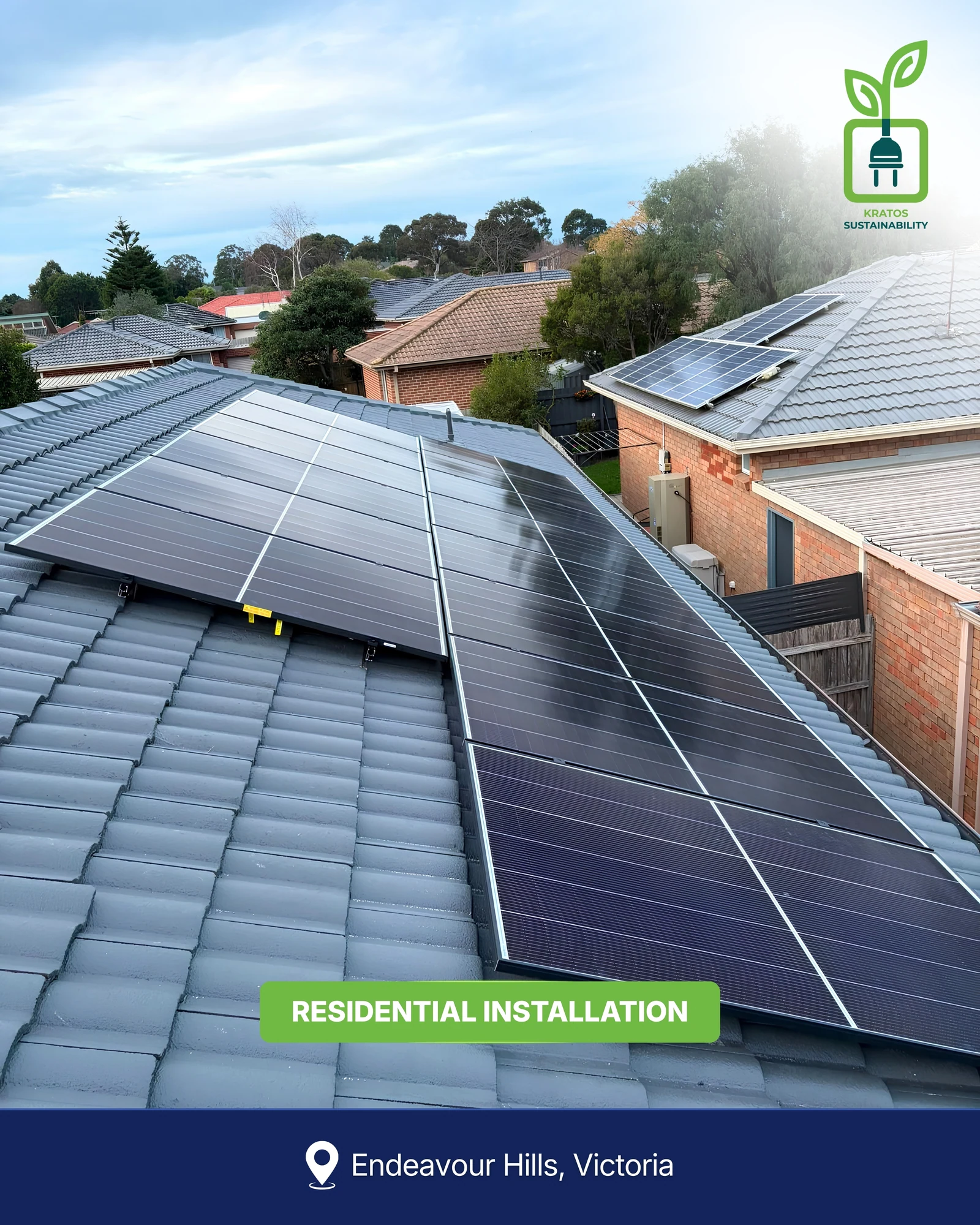
Every install below is a real Kratos job, with the suburb and month it was completed. As we finish work around Sutherland, those projects will appear here too.
South AustraliaNov 2026
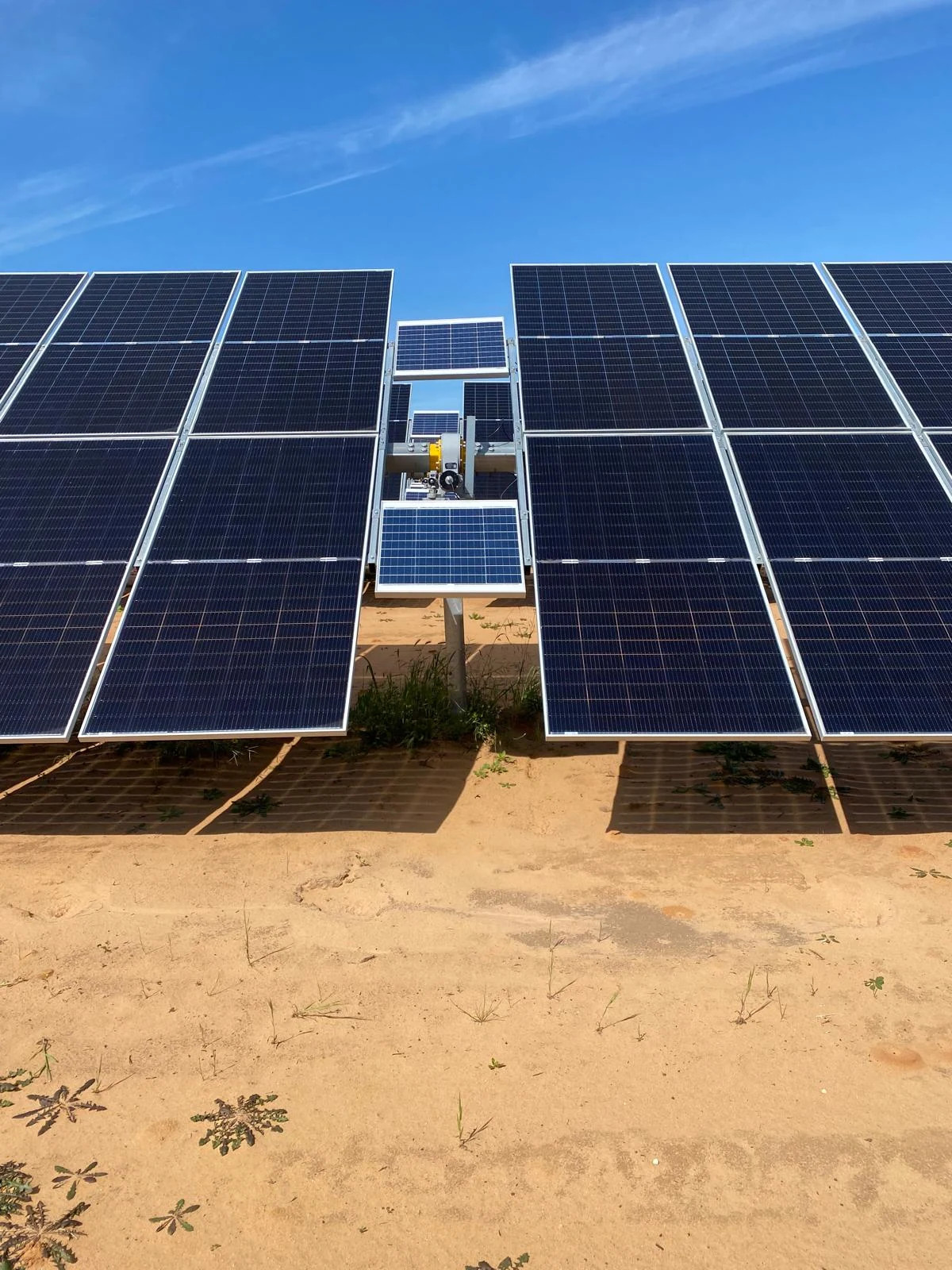
Kratos Energy’s 5 MW Solar Project in South Australia
Kratos Energy’s 5 MW solar project in South Australia showcases renewable energy infrastructure at scale. Featuring ground-mounted solar arrays and dedicated electrical infrastructure, the project forms part of our commitment to developing large-scale solar opportunities across Australia.
The project photographs offer a closer look at the installation—from rows of solar panels to the supporting structures, cabling and electrical equipment behind the system.
Project at a Glance
Project detail
Overview
Location
South Australia
Capacity
5 MW
Project category
Large-scale solar
Installation type
Ground-mounted solar photovoltaic system
Featured infrastructure
Solar arrays, mounting structures, electrical equipment and control panels
A Closer Look at the Solar Installation
The site features rows of elevated solar panels arranged across open land, with access routes between sections of the installation. Ground-mounted systems allow the array layout to be planned around the site’s terrain, available space and maintenance requirements.
The photographs also show the underside of the arrays, including structural supports and cable routing. These less-visible components are an essential part of a solar installation, alongside the panels themselves.
Dedicated electrical enclosures and control equipment highlight the infrastructure required to support a project of this scale. Together, the images provide a practical view of the engineering involved in a large-scale solar site.
Large-Scale Solar Expertise
A solar farm requires coordination across site assessment, engineering, equipment selection, construction and network requirements.
Kratos Energy’s large-scale solar services cover solar farm development, engineering and construction support, grid connection coordination, and operational support. We work with landowners, investors and commercial partners to assess opportunities and progress renewable energy projects.
Explore our project portfolio to discover more of our solar and battery installations.
Discuss Your Next Solar Project
Have land suitable for solar development, a commercial energy requirement or a renewable energy project in mind?
Contact Kratos Energy to discuss your site, objectives and potential next steps.
Call 1300 089 547
“Kratos Energy arranged my solar battery installation, and the entire process went very smoothly. I was kept informed every step of the way. Logan from LJ Electrical arrived on time and completed an excellent installation. He explained everything clearly and even helped me install the monitoring app before leaving.”
Paul Phillips · Google review
“Kratos Energy offers different pricing options, allowing customers to choose what suits their needs. The quality of work was absolutely worth it, and the team went above and beyond during our solar installation.”
As an estimate, a 6.6kW system starts from $7,410, a 10kW system starts from $10,300 and a 13.2kW system starts from $11,250 (with battery prices starting from $4,290), with the STC discount for postcode 2232 already taken off (incl. GST for metro areas; regional areas subject to freight and travel costs). Those are starting estimates for a straightforward install, not a fixed price. If you are planning to electrify, it is usually worth going a size up at install rather than adding panels in a second visit — the labour and the scaffold are the expensive part and you only want to pay for them once.
What solar rebate can I get in Sutherland (2232)?
Sutherland is in STC Zone 3, rating 1.382. In 2026 a 6.6kW system creates 45 certificates, worth roughly $1,710 off the price, and a 10kW system 69 certificates, roughly $2,622. It is a discount applied at the point of sale, not a grant you apply for afterwards. Separate incentives exist for batteries and, through other schemes, for some appliance upgrades — worth asking about, and not something we administer.
Does going all-electric make solar more worthwhile or less?
More, and by a wide margin, which is the opposite of what people expect. Solar pays best on the power you use yourself rather than the power you export — on our NSW modelling figures that is a 27c difference per kilowatt-hour. Moving cooking, hot water, heating and eventually a car onto electricity gives your system far more of your own consumption to supply. A house that halves its daytime export because it is now heating water at noon has not lost anything; it has converted 5c into 32c.
What order should I do things in?
Solar first in most cases, then the appliances as they come due, and gas disconnection last. Solar first because everything that follows then runs on generation you already own, and because sizing is cheapest to get right once. Appliances as they fail rather than all at once, because replacing a working appliance to save running costs rarely pays back. And disconnection last for the reason below, which is the piece most people miss.
Why should gas disconnection come last?
Because you keep paying the daily supply charge until the very last gas appliance is gone. That fixed charge is often the largest single line on a gas bill, and it does not shrink as you use less — a household down to one gas appliance is paying nearly the same standing cost as one using gas for everything. The saving is captured in one step, at the end. That also means the last appliance to convert is worth doing deliberately rather than leaving indefinitely, because it is holding the whole saving hostage.
Which appliance is worth converting first?
Hot water, usually, because it is the largest single energy use in most homes and the most flexible about when it runs — which makes it the load that pairs best with a roof full of panels. Cooking tends to be the one people most want to change and the smallest in energy terms. Space heating sits in between and depends on your climate and your existing system. We do not install heat pumps, hot water systems or cooktops, so take that ordering as a view rather than a quote, and get the appliance advice from someone who fits them.
Will my switchboard cope with all of this?
That is the question worth asking before you start rather than three appliances in. Plenty of housing in this area is old enough that the board was designed for a very different house, and each electric appliance you add takes a circuit and a share of the capacity. Having an electrician assess it once, at the start, is far cheaper than discovering the limit incrementally — and if a switchboard upgrade is coming anyway, doing it alongside the solar install saves paying for the same labour twice.
Who approves a solar connection in Sutherland?
The distribution network that owns the poles and wires in your street approves it — not your retailer — and we lodge the application for you. On a flexible export connection, a complying system up to 30kW is automatically approved to export up to 10kW per phase. On a fixed export connection, the approval is 3kW per system. If your home has no reliable internet, exports are limited to a static 1.5kW per system until a connection is available. Note that an export limit restricts what you send back and never what you use — so a house that electrifies is less affected by it, not more.