Solar, batteries and EV chargers for Cardiff, Cardiff Heights, Cardiff South, Cameron Park, Edgeworth, Glendale and Macquarie Hills — the whole 2285 postcode. Two identical systems on two identical houses in this street can be worth meaningfully different amounts, and the reason has nothing to do with the panels. It is the electricity plan behind the meter, and almost nobody revisits theirs after an install.
6.6kW systems starting from $7,410 (battery prices start from $4,290)
Savings modelled against your actual tariff, not a state average
A straight explanation of flat, time-of-use and demand plans
Postcode 2285 sits in Zone 3 (rating 1.382), which sets your rebate
27c
What a self-used kilowatt-hour beats an exported one by — 32c against 5c, on our NSW modelling figures
4.1 kWh
Average daily output per kW of panels in the Sydney region
Lake Macquarie City Council
Most rooftop solar on houses here needs no council approval
Solar prices in Cardiff
What solar costs in Cardiff
These are estimated starting prices, not fixed quotes. Each package starts from the figure shown for a straightforward installation and already has the federal STC discount for postcode 2285 taken off. What your home actually costs depends on your roof, switchboard and connection — we confirm it in writing after a free assessment.
Anything that applies to your home is itemised in your written quote before you commit to it.
Prices start from the figures above, fully installed net payable after the federal STC rebate and including GST for metro areas (regional areas subject to freight and travel costs; T&Cs apply). Checked October 2026. STC figures use postcode 2285, 2026 deeming and an assumed $38 per certificate — the discount you receive depends on the certificate market on your installation date. Savings are modelled on typical usage and tariffs and are not a guarantee.
The plan behind the meter
Your tariff decides what your system is worth
Solar advice almost always stops at the roof, and the retail plan is treated as somebody else's problem. It is not — it is half the arithmetic, it costs nothing to change, and the plan that suited your household before an install is frequently the wrong one afterwards, because solar does not reduce your usage evenly. It removes the middle of the day and leaves the evening behind.
Flat, time-of-use, demand
Three shapes. Flat charges one rate whenever you use power. Time-of-use splits the day, with peak usually on weekday evenings. A demand tariff adds a charge based on your single highest half-hour in the period, separately from what you consumed. Which one suits you is a question about timing, not about price.
Solar inverts the comparison
A system takes out most of your daytime consumption, which is the cheap part of a time-of-use plan. What is left to pay for is the evening, which is the expensive part. That does not make time-of-use wrong — it means the comparison has to be run on your post-solar usage rather than on the bills you had before.
A demand charge is a battery argument
If your bill has a demand component, panels barely help, because the peak half-hour almost always lands after sunset with the oven on and everyone home. Discharging a battery through that window reduces the charge directly. It is one of the few places where storage does something extra panels genuinely cannot.
Do not pick the plan with the biggest feed-in number
It is the easiest figure for a retailer to advertise and it frequently sits on top of higher usage rates, so the plan costs more than it pays. On our NSW modelling figures a kilowatt-hour used in the house is worth 32c against 5c exported — a 27c gap — which means for most households the usage rate is simply the larger term. Compare plans on total annual cost using your own interval data, which your retailer must provide on request, and use at least a full year of it so the seasonal shape is in there. Then do it again a year after your system goes on, because by then your usage pattern is a different shape from the one you compared with. None of this is something we sell you; it is the part of the saving you can have for the price of an afternoon.
Network rules change and every connection is approved on its own merits — we confirm the limit that applies to your address in writing before install day.
Why the usage rate matters more than the feed-in rate
The whole of this page rests on one piece of arithmetic: a kilowatt-hour you use yourself is worth several times one you send away. Once that is clear, most tariff questions answer themselves, and so do a lot of questions about system size and timing. Our Bangor page works it through properly using the same figures our calculators run on, including why waiting for feed-in rates to improve is not a plan.
Home batteries attract two separate incentives. The federal Cheaper Home Batteries Program takes an estimated $3,402 off a 13.5 kWh battery, and NSW’s NSW VPP connection incentive (battery via federal program) can add more on top. Battery prices start from $4,290 fully installed after rebates (incl. GST for metro areas; regional areas subject to freight and travel costs). Already have solar? We check your inverter first — some systems take a battery as they are, others need a hybrid inverter.
≈ $3,402
Estimated federal rebate on 13.5 kWh of usable storage
+ NSW
NSW virtual power plant (VPP) incentive when you connect an eligible battery to a VPP, on top of the federal Cheaper Home Batteries discount. The NSW upfront battery discount ended for installs from 1 July 2025.
Size your solar for it now. Our 10kW package comes pre-wired for a battery and an EV charger, so adding one later is a small job rather than a rebuild.
We review your roof, shading, switchboard and a recent bill. The bill is doing real work here — the tariff printed on it changes what a system is worth to you.
Step 2
Written quote
A quote naming the panel and inverter models, the system size, the total price and what is excluded, with savings modelled against your actual tariff rather than a state average.
Step 3
Network approval
We lodge your grid-connection application and confirm any export limit before install day.
Step 4
Installation
Accredited electricians install, test and commission the system, then clean up. You are told who is coming.
Step 5
Switch-on
Your retailer updates the meter and we set up monitoring. Come back to your plan after a full quarter of real data — that is when you can actually tell whether you are on the right one.
Our work
Solar systems we have installed
Every install below is a real Kratos job, with the suburb and month it was completed. As we finish work around Cardiff, those projects will appear here too.
South AustraliaNov 2026
Kratos Energy’s 5 MW Solar Project in South Australia
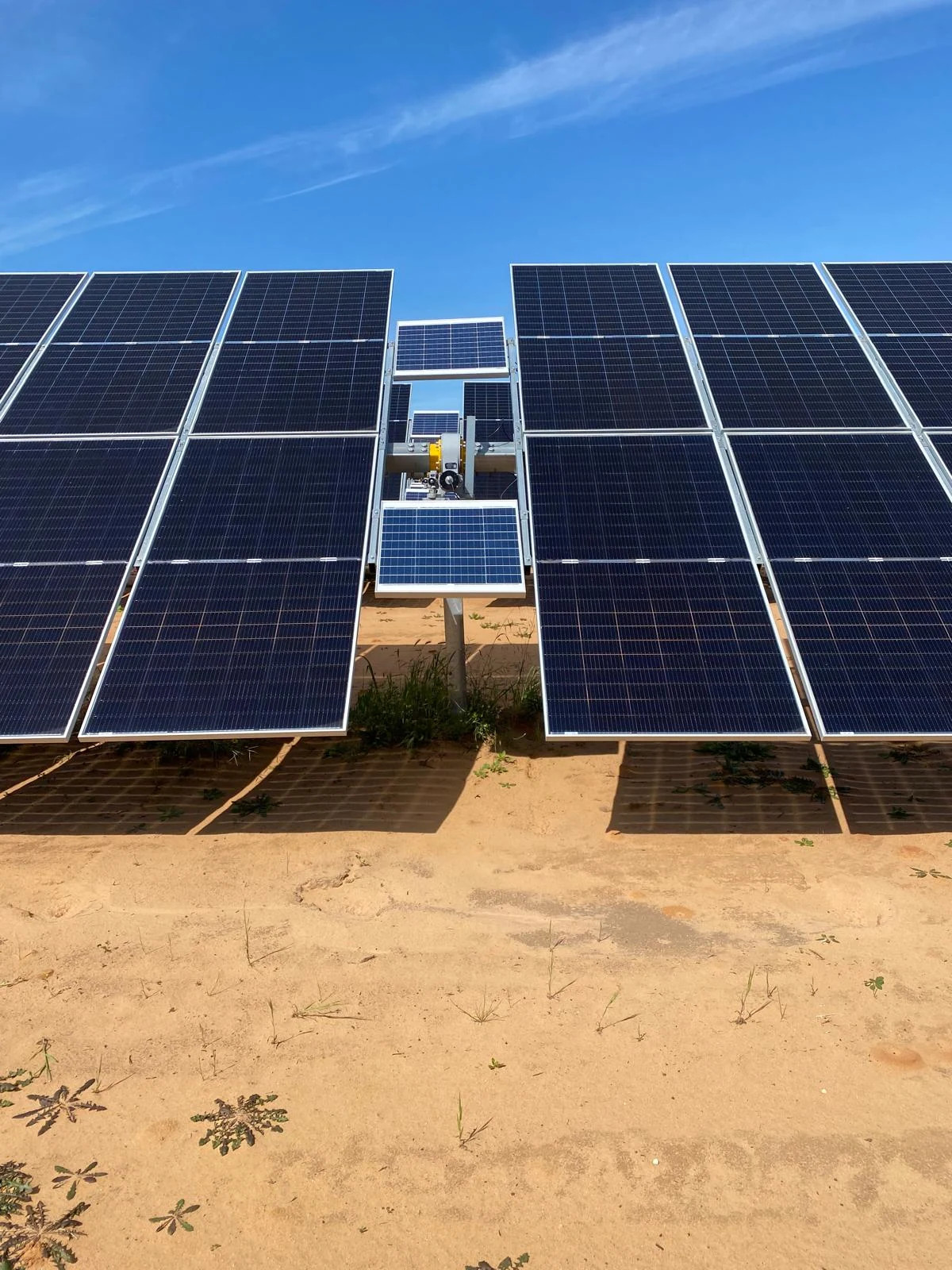
Kratos Energy’s 5 MW solar project in South Australia showcases renewable energy infrastructure at scale. Featuring ground-mounted solar arrays and dedicated electrical infrastructure, the project forms part of our commitment to developing large-scale solar opportunities across Australia.
The project photographs offer a closer look at the installation—from rows of solar panels to the supporting structures, cabling and electrical equipment behind the system.
Project at a Glance
Project detail
Overview
Location
South Australia
Capacity
5 MW
Project category
Large-scale solar
Installation type
Ground-mounted solar photovoltaic system
Featured infrastructure
Solar arrays, mounting structures, electrical equipment and control panels
A Closer Look at the Solar Installation
The site features rows of elevated solar panels arranged across open land, with access routes between sections of the installation. Ground-mounted systems allow the array layout to be planned around the site’s terrain, available space and maintenance requirements.
The photographs also show the underside of the arrays, including structural supports and cable routing. These less-visible components are an essential part of a solar installation, alongside the panels themselves.
Dedicated electrical enclosures and control equipment highlight the infrastructure required to support a project of this scale. Together, the images provide a practical view of the engineering involved in a large-scale solar site.
Large-Scale Solar Expertise
A solar farm requires coordination across site assessment, engineering, equipment selection, construction and network requirements.
Kratos Energy’s large-scale solar services cover solar farm development, engineering and construction support, grid connection coordination, and operational support. We work with landowners, investors and commercial partners to assess opportunities and progress renewable energy projects.
Explore our project portfolio to discover more of our solar and battery installations.
Discuss Your Next Solar Project
Have land suitable for solar development, a commercial energy requirement or a renewable energy project in mind?
Contact Kratos Energy to discuss your site, objectives and potential next steps.
Call 1300 089 547
“I'd like to thank Nessar and my neighbour Hasan for doing a wonderful job organising the installation of solar panels on my house. Wei and his team worked incredibly hard, especially since my home is double-storey, making the installation quite challenging. They spent the entire day ensuring everything was completed correctly. I'm very happy with the service.”
Legend · Google review
“I'm so pleased I chose Kratos Energy after comparing three different providers while building my home. Their pricing, product choices, and installation quality exceeded my expectations.”
As an estimate, a 6.6kW system starts from $7,410, a 10kW system starts from $10,300 and a 13.2kW system starts from $11,250 (with battery prices starting from $4,290), with the STC discount for postcode 2285 already taken off (incl. GST for metro areas; regional areas subject to freight and travel costs). Those are starting estimates for a straightforward install, not a fixed price. What those systems are worth to you, though, varies by well over a hundred dollars a year depending purely on which electricity plan you are on — which is the subject of this page and costs nothing to fix.
What solar rebate can I get in Cardiff (2285)?
Cardiff is in STC Zone 3, rating 1.382. In 2026 a 6.6kW system creates 45 certificates, worth roughly $1,710 off the price, and a 10kW system 69 certificates, roughly $2,622. It is a discount applied at the point of sale, not a grant you apply for afterwards. Your retail plan has no bearing on it at all — the certificates come off the system price before a retailer is involved.
Which kind of electricity plan is best with solar?
There is no single answer, which is why nobody gives you one. There are three shapes to understand. A flat rate charges the same cents per kilowatt-hour whenever you use it. A time-of-use plan splits the day into peak, shoulder and off-peak, with peak usually falling on weekday evenings. A demand tariff adds a separate charge based on your single highest half-hour of usage in the billing period. Which suits you depends entirely on when your household actually uses power, and solar changes that pattern — which is why the plan that was right before you installed often is not afterwards.
Why can time-of-use be worse for a solar household?
Because solar already removes most of your daytime usage, and daytime is the part of a time-of-use plan that is cheap. What remains on your bill is the evening — which is where the peak rate sits. You end up paying the premium rate on the hours you still buy, and collecting the discount on hours you were no longer buying anyway. It is not automatic that time-of-use is a bad deal with solar; it is just that the comparison has to be run on your post-solar usage rather than on the shape your bills had before.
What is a demand charge and does solar help with it?
A demand charge bills you on your highest single half-hour of consumption in the period, separately from the kilowatt-hours you used. The catch for a solar household is that this peak almost always happens after sunset — the oven, the aircon and everyone home at once — so a solar system barely touches it. This is one of the few places where a battery does something panels cannot, because discharging through that half-hour directly reduces the charge. If there is a demand component on your bill, it changes the battery arithmetic genuinely rather than rhetorically.
Should I just pick the plan with the highest feed-in tariff?
No, and this is the most common mistake made after an install. A headline feed-in rate is the easiest number for a retailer to advertise and frequently rides on top of higher usage rates, so the plan costs you more than it pays. On our NSW modelling figures a kilowatt-hour used in the house is worth 32c and one exported is worth 5c — a gap of 27c — so for most households the usage rate is simply the bigger number in the equation. Compare plans on total annual cost using your own data, not on the one figure in the advertisement.
Where do I get my own usage data?
From your retailer, and you are entitled to it. A smart meter records consumption in intervals, and your retailer can provide that history — which lets you test a plan against what your household genuinely did rather than against an assumption. It is tedious and it is the only way to answer this properly. If you already have solar, ask for at least a full year, because the seasonal shape is the whole point.
Who approves a solar connection in Cardiff?
The distribution network that owns the poles and wires in your street approves it — not your retailer — and we lodge the application for you. On a flexible export connection, a complying system up to 30kW is automatically approved to export up to 10kW per phase. On a fixed export connection, the approval is 3kW per system. If your home has no reliable internet, exports are limited to a static 1.5kW per system until a connection is available. Your network and your retailer are two different businesses, which is exactly why a tariff question and an export question get different answers from different people.
We install across Lake Macquarie and the wider NSW service area, including Cardiff Heights, Cardiff South, Cameron Park, Edgeworth, Glendale, Macquarie Hills.