Solar, batteries and EV chargers across Cherrybrook — a postcode that contains nothing but the suburb itself. Every quote you receive will mention 10kW per phase without ever explaining what a phase is or whether you have one or three of them. It is the difference between two quite different systems, and on most houses here it also turns out to be the wrong thing to spend money fixing.
6.6kW systems starting from $7,410 (battery prices start from $4,290)
We establish single-phase or three-phase before we recommend a size
A straight answer on whether an upgrade is worth it, which is usually no
Postcode 2126 sits in Zone 3 (rating 1.382), which sets your rebate
10kW per phase
The flexible export allowance — up to 30kW across three phases, where you have them
4.1 kWh
Average daily output per kW of panels in the Sydney region
Hornsby Shire Council
Most rooftop solar on houses here needs no council approval
Solar prices in Cherrybrook
What solar costs in Cherrybrook
These are estimated starting prices, not fixed quotes. Each package starts from the figure shown for a straightforward installation and already has the federal STC discount for postcode 2126 taken off. What your home actually costs depends on your roof, switchboard and connection — we confirm it in writing after a free assessment.
Anything that applies to your home is itemised in your written quote before you commit to it.
Prices start from the figures above, fully installed net payable after the federal STC rebate and including GST for metro areas (regional areas subject to freight and travel costs; T&Cs apply). Checked October 2026. STC figures use postcode 2126, 2026 deeming and an assumed $38 per certificate — the discount you receive depends on the certificate market on your installation date. Savings are modelled on typical usage and tariffs and are not a guarantee.
Single-phase or three
What a phase is, and why it keeps appearing in your quotes
Every export rule in Australia is written per phase, so the sentence “up to 10kW per phase” lands in front of homeowners who have never been told how many phases they have. Most houses in Cherrybrook have one. Some have three. Here is what actually changes, and what it is worth paying to change.
Three phases, three allowances
The published export allowance is per phase, so a three-phase home running a three-phase inverter has up to 30kW of headroom where a single-phase home has 10kW. Note what is being capped: not what your system generates or what your house uses, only what you are permitted to send back.
The supply comes first
A three-phase inverter is not three-phase power. You need the supply before the inverter is meaningful, and on a three-phase supply the inverter choice still matters — a single-phase inverter puts everything onto one of your three, so the other two are not directly offset by your own generation.
An upgrade is street work
Bringing three phases to a house that does not have them means work in the network's infrastructure as well as a new switchboard inside, running to several thousand dollars and depending heavily on whether three-phase already reaches your boundary. It is not a line item on a solar quote.
Three-phase earns its cost through loads, not through solar
Weighed against the extra export income it would unlock at current feed-in rates, upgrading purely so you can export more does not get there — and we would rather say that than sell the larger job. Where it does pay is when you want to run something that needs it: ducted air conditioning on a big house, a workshop with real machinery, substantial pool plant, or a three-phase EV charger that roughly halves charging time. If one of those is already on your list, do that work first and size the solar afterwards, because you will otherwise pay twice for switchboard labour. One local caveat worth knowing: Cherrybrook sits near a boundary between two distribution networks and neighbouring suburbs are not all on the same one. The 10kW per phase flexible figure is common to both, but the fixed-connection limit is not, so we confirm which rules apply from your address rather than quoting the next suburb's.
Network rules change and every connection is approved on its own merits — we confirm the limit that applies to your address in writing before install day.
The load that most often starts this conversation
Nine times out of ten the three-phase question arrives attached to an electric car. It is worth separating the two decisions, because a charger is a load rather than a generator and never costs you export headroom — while the thing that actually decides whether solar charges your car is timing rather than system size. Our Spring Farm page works through what a commute really costs in kilowatt-hours and how much extra panel capacity that implies.
Home batteries attract two separate incentives. The federal Cheaper Home Batteries Program takes an estimated $3,402 off a 13.5 kWh battery, and NSW’s NSW VPP connection incentive (battery via federal program) can add more on top. Battery prices start from $4,290 fully installed after rebates (incl. GST for metro areas; regional areas subject to freight and travel costs). Already have solar? We check your inverter first — some systems take a battery as they are, others need a hybrid inverter.
≈ $3,402
Estimated federal rebate on 13.5 kWh of usable storage
+ NSW
NSW virtual power plant (VPP) incentive when you connect an eligible battery to a VPP, on top of the federal Cheaper Home Batteries discount. The NSW upfront battery discount ended for installs from 1 July 2025.
Size your solar for it now. Our 10kW package comes pre-wired for a battery and an EV charger, so adding one later is a small job rather than a rebuild.
We review your roof, shading, switchboard and a recent bill — and establish whether the house is single-phase or three-phase, because that changes what is worth quoting.
Step 2
Written quote
A quote naming the panel and inverter models, the system size, the total price and what is excluded. If three-phase would change the answer, we will say so rather than quietly sizing around it.
Step 3
Network approval
We lodge your grid-connection application and confirm the export limit that applies to your address in writing before install day.
Step 4
Installation
Accredited electricians install, test and commission the system, then clean up. You are told who is coming.
Step 5
Switch-on
Your retailer updates the meter, we set up monitoring, and you get the compliance paperwork rather than being told it is in the post.
Our work
Solar systems we have installed
Every install below is a real Kratos job, with the suburb and month it was completed. As we finish work around Cherrybrook, those projects will appear here too.
South AustraliaNov 2026
Kratos Energy’s 5 MW Solar Project in South Australia
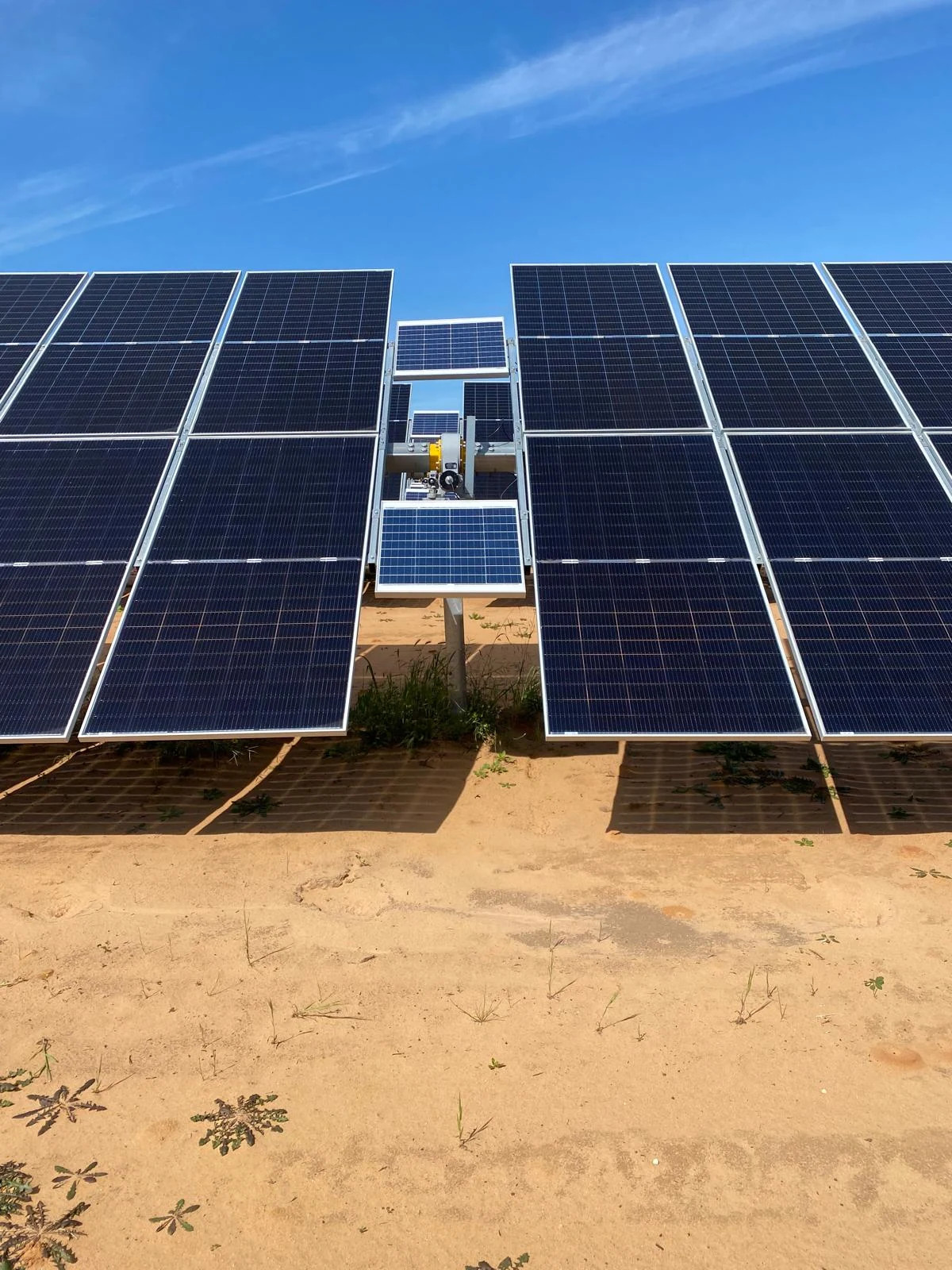
Kratos Energy’s 5 MW solar project in South Australia showcases renewable energy infrastructure at scale. Featuring ground-mounted solar arrays and dedicated electrical infrastructure, the project forms part of our commitment to developing large-scale solar opportunities across Australia.
The project photographs offer a closer look at the installation—from rows of solar panels to the supporting structures, cabling and electrical equipment behind the system.
Project at a Glance
Project detail
Overview
Location
South Australia
Capacity
5 MW
Project category
Large-scale solar
Installation type
Ground-mounted solar photovoltaic system
Featured infrastructure
Solar arrays, mounting structures, electrical equipment and control panels
A Closer Look at the Solar Installation
The site features rows of elevated solar panels arranged across open land, with access routes between sections of the installation. Ground-mounted systems allow the array layout to be planned around the site’s terrain, available space and maintenance requirements.
The photographs also show the underside of the arrays, including structural supports and cable routing. These less-visible components are an essential part of a solar installation, alongside the panels themselves.
Dedicated electrical enclosures and control equipment highlight the infrastructure required to support a project of this scale. Together, the images provide a practical view of the engineering involved in a large-scale solar site.
Large-Scale Solar Expertise
A solar farm requires coordination across site assessment, engineering, equipment selection, construction and network requirements.
Kratos Energy’s large-scale solar services cover solar farm development, engineering and construction support, grid connection coordination, and operational support. We work with landowners, investors and commercial partners to assess opportunities and progress renewable energy projects.
Explore our project portfolio to discover more of our solar and battery installations.
Discuss Your Next Solar Project
Have land suitable for solar development, a commercial energy requirement or a renewable energy project in mind?
Contact Kratos Energy to discuss your site, objectives and potential next steps.
Call 1300 089 547
“Kratos Energy completed our solar system seamlessly, and we are very satisfied with the entire process and results. They offered a very reasonable price for the same products and services compared to other providers. A special mention to Nessar, who worked hard and efficiently throughout the process. Highly recommended to future customers.”
Alan Gui · Google review
“We added a battery to our existing solar system, and the service was handled with minimal interruption. Ordering the parts and arranging installation was smooth and efficient. Kratos Energy and their team were wonderful to deal with, and I highly recommend them for their professionalism and ongoing customer support.”
As an estimate, a 6.6kW system starts from $7,410, a 10kW system starts from $10,300 and a 13.2kW system starts from $11,250 (with battery prices starting from $4,290), with the STC discount for postcode 2126 already taken off (incl. GST for metro areas; regional areas subject to freight and travel costs). Those are starting estimates for a straightforward install, not a fixed price. The common additions on Cherrybrook's housing stock are two-storey access and a switchboard upgrade — and if someone has suggested a three-phase upgrade as part of the job, that is a far larger number and deserves its own conversation.
What solar rebate can I get in Cherrybrook (2126)?
Cherrybrook is in STC Zone 3, rating 1.382. In 2026 a 6.6kW system creates 45 certificates, worth roughly $1,710 off the price, and a 10kW system 69 certificates, roughly $2,622. It is a discount applied at the point of sale, not a grant you apply for afterwards, and it is calculated on capacity and postcode only — single-phase or three-phase makes no difference to it.
How do I tell whether I have single-phase or three-phase power?
Open the meter box and look at the main switch. A single main switch feeding the house is the usual sign of single-phase; three linked main switches, or a main switch three poles wide, means three phases are coming in. The meter itself is another clue, and on an older board the number of incoming conductors tells you. If you are not certain, do not guess from the internet — any electrician will confirm it in a minute, and we check it at the assessment anyway because it changes what we would recommend.
Does three-phase mean I can have a bigger solar system?
It means you can export more of what it makes, which is a slightly different thing. The export allowance networks publish is per phase — on a flexible connection that is up to 10kW per phase, so a three-phase home with a three-phase inverter has headroom of up to 30kW across the three where a single-phase home has 10kW. Generation itself is not capped by your phases; what gets capped is what you are allowed to send back. On a house that uses most of its power during the day, that distinction matters far less than it sounds.
Should I upgrade to three-phase so I can put on more solar?
Almost never for solar alone. Bringing three phases to a house that does not have them means network work in the street as well as a new switchboard inside, and it runs to several thousand dollars — the figure depends enormously on whether three-phase is already available at your boundary. Weighed against the extra export income it would unlock at current feed-in rates, the arithmetic does not get there on its own. The upgrade earns its cost through loads, not through solar.
So when is a three-phase upgrade actually worth it?
When you want to run something that needs it, and the solar benefit then comes along free. Ducted air conditioning on a large house, a workshop with proper machinery, a pool with substantial plant, or a three-phase EV charger that halves your charging time are the usual reasons. If one of those is already on your list, do that work first and size the solar afterwards — the order saves you paying twice for switchboard labour.
I have three-phase power. Do I need a three-phase inverter?
Not necessarily, but it is usually the better choice, and it is worth deciding deliberately rather than by default. A single-phase inverter on a three-phase supply works perfectly well; it just puts all its generation onto one of your three phases, so your export headroom is that one phase's allowance and your own loads on the other two are not directly offset. A three-phase inverter spreads generation across all three, which uses more of it in the house before anything is exported. The gap in price is modest; the gap in outcome depends on how your loads are distributed.
Who approves a solar connection in Cherrybrook?
The distribution network that owns the poles and wires in your street approves it — not your retailer — and we lodge the application for you. Worth knowing here specifically: Cherrybrook sits close to a boundary between two distribution networks, and neighbouring suburbs are not all on the same one. The flexible export allowance of up to 10kW per phase is common to both, but the fixed-connection figure is not, so we confirm from your actual address which rules apply and put the limit in writing before install day rather than quoting a number that may belong to the next suburb.