Solar, batteries and EV chargers for Moss Vale, Berrima, New Berrima, Sutton Forest, Burrawang, Medway, Canyonleigh, Fitzroy Falls and Kangaroo Valley — the whole 2577 postcode. A good deal of what we quote around Moss Vale is not a house, it is a property: sheds, pumps, a cool room, sometimes a second dwelling. The sizing method that works on a suburban roof does not transfer, and the reason is simple enough to explain in a paragraph.
6.6kW systems starting from $7,410 (battery prices start from $4,290)
Cable runs to sheds and second buildings priced as their own line
Sized on how your load is shaped, not on an annual total
Postcode 2577 sits in Zone 3 (rating 1.382) — the same as Sydney, so the rebate does not shrink out here
Network approval
We lodge your grid-connection application and confirm your export limit
4.1 kWh
Daily output per kW we model from — a Sydney-region annual average
Wingecarribee Shire Council
Most rooftop solar on houses here needs no council approval
Solar prices in Moss Vale
What solar costs in Moss Vale
These are estimated starting prices, not fixed quotes. Each package starts from the figure shown for a straightforward installation and already has the federal STC discount for postcode 2577 taken off. What your home actually costs depends on your roof, switchboard and connection — we confirm it in writing after a free assessment.
Anything that applies to your home is itemised in your written quote before you commit to it.
Prices start from the figures above, fully installed net payable after the federal STC rebate and including GST for metro areas (regional areas subject to freight and travel costs; T&Cs apply). Checked October 2026. STC figures use postcode 2577, 2026 deeming and an assumed $38 per certificate — the discount you receive depends on the certificate market on your installation date. Savings are modelled on typical usage and tariffs and are not a guarantee.
Sizing for a property
The annual bill is the wrong number to start from
On a suburban house, annual consumption is a reasonable proxy for everything — the load is a smooth domestic baseline and a size falls out of it. On a property it tells you almost nothing, because two places using identical kilowatt-hours in a year can have completely different demand and need completely different systems. Solar only ever meets a load that is happening at the same moment as the sunshine, and an annual figure is precisely the number that deletes the timing.
Shape, not total
A bore pump running hard for two hours, a cool room running continuously, a workshop that spikes whenever someone is in it — these are three different problems that can add up to the same yearly number as a quiet four-bedroom house. The lumps and when they happen are the entire design question.
Your big loads are your best loads
A household's peak is the evening and cannot move far. A pump, an irrigation run or a cool room's heaviest work often does not care what time it happens, which makes a property the rare case where consumption can be deliberately lined up with generation — provided the timing is genuinely controlled rather than hoped for.
Starting current is not running current
A motor draws several times its running current for a moment as it starts. The grid shrugs that off, so it rarely matters on a normal connection — but it matters enormously the day the conversation turns to batteries or backup, because a system that comfortably runs a pump will not necessarily start one from storage.
Bring interval data, and tell us which meter is which
Your retailer must provide interval data on request where you have a smart meter, and a year of it shows the lumps, their timing and the seasonal pattern — which on an agricultural property is usually the dominant feature. That is what a system should be sized against; an annual total is what gets quoted against when nobody asked. The second thing to settle before anything is quoted is metering. Power generated behind one meter offsets consumption behind that meter, so a shed, a second dwelling or a separate business supply on its own meter is effectively a different customer to the network and gets no benefit from a system connected at the house. Sometimes the right answer is to put the system on the supply with the largest daytime load rather than on the dwelling. Sometimes it is two systems. We would rather work that out before writing a price than explain it afterwards.
Network rules change and every connection is approved on its own merits — we confirm the limit that applies to your address in writing before install day.
The clearest worked example of a shiftable load
The argument on this page is easiest to see on the humblest version of it. A pool pump is a large, dull, entirely movable load, and moving it into the middle of the day is the single cheapest thing most solar households ever do. The same reasoning applies to a bore pump or an irrigation run, with more zeroes attached. Our Harrington Park page works the numbers through properly.
Home batteries attract two separate incentives. The federal Cheaper Home Batteries Program takes an estimated $3,402 off a 13.5 kWh battery, and NSW’s NSW VPP connection incentive (battery via federal program) can add more on top. Battery prices start from $4,290 fully installed after rebates (incl. GST for metro areas; regional areas subject to freight and travel costs). Already have solar? We check your inverter first — some systems take a battery as they are, others need a hybrid inverter.
≈ $3,402
Estimated federal rebate on 13.5 kWh of usable storage
+ NSW
NSW virtual power plant (VPP) incentive when you connect an eligible battery to a VPP, on top of the federal Cheaper Home Batteries discount. The NSW upfront battery discount ended for installs from 1 July 2025.
Size your solar for it now. Our 10kW package comes pre-wired for a battery and an EV charger, so adding one later is a small job rather than a rebuild.
We look at the roof, the shading, the switchboard and — on a property — the rest of it: what runs in the sheds, what the pumps do, and which meter each of them is on.
Step 2
Written quote
A quote naming the panel and inverter models, the system size, the total price and what is excluded, with every cable run to a second building sized and priced as its own line.
Step 3
Network approval
We lodge your grid-connection application and confirm any export limit before install day. Where a property has more than one meter, we establish early which of them the system is actually connected behind.
Step 4
Installation
Accredited electricians install, test and commission the system, then clean up. You are told who is coming and when the power will be off.
Step 5
Switch-on
Your retailer updates the meter, we set up monitoring, and you get the compliance paperwork. On a property, monitoring earns its keep immediately, because it shows you when the big loads are actually running.
Our work
Solar systems we have installed
Every install below is a real Kratos job, with the suburb and month it was completed. As we finish work around Moss Vale, those projects will appear here too.
South AustraliaNov 2026
Kratos Energy’s 5 MW Solar Project in South Australia
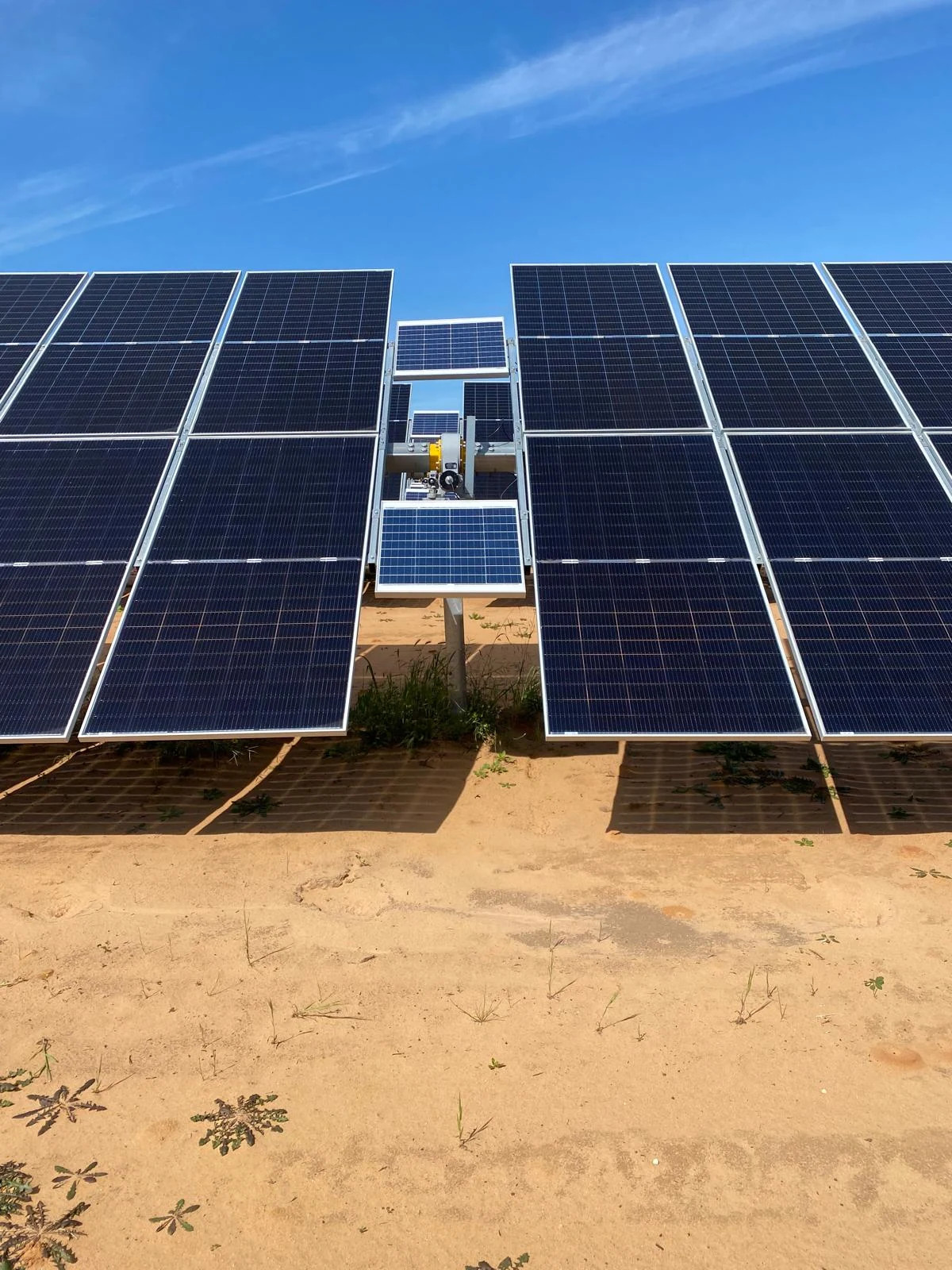
Kratos Energy’s 5 MW solar project in South Australia showcases renewable energy infrastructure at scale. Featuring ground-mounted solar arrays and dedicated electrical infrastructure, the project forms part of our commitment to developing large-scale solar opportunities across Australia.
The project photographs offer a closer look at the installation—from rows of solar panels to the supporting structures, cabling and electrical equipment behind the system.
Project at a Glance
Project detail
Overview
Location
South Australia
Capacity
5 MW
Project category
Large-scale solar
Installation type
Ground-mounted solar photovoltaic system
Featured infrastructure
Solar arrays, mounting structures, electrical equipment and control panels
A Closer Look at the Solar Installation
The site features rows of elevated solar panels arranged across open land, with access routes between sections of the installation. Ground-mounted systems allow the array layout to be planned around the site’s terrain, available space and maintenance requirements.
The photographs also show the underside of the arrays, including structural supports and cable routing. These less-visible components are an essential part of a solar installation, alongside the panels themselves.
Dedicated electrical enclosures and control equipment highlight the infrastructure required to support a project of this scale. Together, the images provide a practical view of the engineering involved in a large-scale solar site.
Large-Scale Solar Expertise
A solar farm requires coordination across site assessment, engineering, equipment selection, construction and network requirements.
Kratos Energy’s large-scale solar services cover solar farm development, engineering and construction support, grid connection coordination, and operational support. We work with landowners, investors and commercial partners to assess opportunities and progress renewable energy projects.
Explore our project portfolio to discover more of our solar and battery installations.
Discuss Your Next Solar Project
Have land suitable for solar development, a commercial energy requirement or a renewable energy project in mind?
Contact Kratos Energy to discuss your site, objectives and potential next steps.
Call 1300 089 547
“Highly appreciated and recommended. As a customer, you can deal directly with Nessar Khan and his team, ask questions, and receive clear answers for complete peace of mind. Thank you to Nessar and the team.”
Saleem Muhammad · Google review
“Informative website, excellent workmanship, and a great overall experience. Highly recommended.”
As an estimate, a 6.6kW system starts from $7,410, a 10kW system starts from $10,300 and a 13.2kW system starts from $11,250 (with battery prices starting from $4,290), with the STC discount for postcode 2577 already taken off (incl. GST for metro areas; regional areas subject to freight and travel costs). Those are typical figures for a straightforward install on a house. On a property with sheds, pumps or a second dwelling the variable is distance — a cable run sized properly for voltage drop is real money and belongs in the quote as its own line, not absorbed into a round number.
What solar rebate can I get in Moss Vale (2577)?
Moss Vale is in STC Zone 3, rating 1.382 — the same zone and rating as Sydney, which surprises people out here. In 2026 a 6.6kW system creates 45 certificates, worth roughly $1,710 off the price, and a 10kW system 69 certificates, roughly $2,622. It is a discount applied at the point of sale, calculated from capacity and postcode only.
Why can't you just size a system from my annual bill?
Because on a property the annual total is close to the least informative number available. Two places using identical kilowatt-hours in a year can need quite different systems: one of them uses a smooth domestic baseline, the other has a bore pump that runs hard for two hours, a cool room that runs continuously, and a workshop that spikes whenever someone is in it. Solar only ever meets a load that is happening at the same moment as the sunshine, so the shape is the whole question and an annual figure deletes it.
What should I give you instead?
Interval data, which your retailer must provide on request if you have a smart meter. It shows consumption in half-hour blocks, so the lumps and their timing are visible rather than averaged away — and a year of it also captures the seasonal pattern, which on an agricultural property is usually the dominant feature. Failing that, a full year of bills plus an honest account of what runs, for how long, and when.
Is a property a good match for solar or a bad one?
Usually a very good one, and better than a house — because the big loads are often the most shiftable loads anyone has. A household's peak is the evening and cannot move much; a pump, an irrigation run or a cool room's hardest work frequently does not care what time of day it happens. That turns a property into the rare case where generation and consumption can be deliberately lined up. The condition is that the timing is actually controlled rather than assumed, which usually means a timer or a controller and a decision, not a hope.
Do I need a bigger inverter to start a large pump?
Not on a grid connection, in most cases — the grid absorbs the surge. It is worth understanding anyway, because a motor draws several times its running current for a moment as it starts, and that matters enormously the day the conversation turns to batteries or backup. A system that comfortably runs a pump will not necessarily start one from storage. If backup is part of what you want, say so at the assessment, because it changes the hardware rather than just the size.
We have more than one meter on the property. Does that complicate things?
It changes what a system can serve, so it is settled first rather than discovered later. Power generated behind one meter offsets consumption behind that meter; a shed, a second dwelling or a separate business supply on its own meter is effectively a different customer to the network and is not helped by a system connected elsewhere. Sometimes the right answer is a system on the supply with the biggest daytime load rather than the one on the house. Sometimes it is two. We work it out before quoting.
Who approves a solar connection in Moss Vale?
The distribution network that owns the poles and wires in your street approves it — not your retailer — and we lodge the application for you. That network also decides how much your system may export: on a flexible export connection, eligible customers can send up to 10kW per phase back to the grid most of the time, while a fixed export limit caps exports at 1.5kW. On a rural property the other thing worth settling early is which buildings are on which supply, since that determines what a single application actually covers.
We install across Southern Highlands and the wider NSW service area, including Berrima, New Berrima, Sutton Forest, Burrawang, Medway, Canyonleigh, Fitzroy Falls, Kangaroo Valley.