Solar, batteries and EV chargers for Springwood, Winmalee, Valley Heights, Sun Valley, Yellow Rock and Hawkesbury Heights — the whole 2777 postcode. Nobody up here needs an explanation of why what is bolted to your roof matters, or of who might one day have to stand in your driveway and work out what they are looking at. This page is about the unglamorous half of a solar installation: isolation, signage, and the switch that used to start fires.
6.6kW systems starting from $7,410 (battery prices start from $4,290)
Isolation point and signage specified in the quote, not assumed
Older systems inspected and explained, including ones we did not install
Postcode 2777 sits in Zone 3 (rating 1.382), which sets your rebate
19 May 2022
When the revised installation standard became mandatory, and rooftop DC isolators stopped being required
4.1 kWh
Average daily output per kW of panels in the Sydney region
Blue Mountains City Council
Most rooftop solar on houses here needs no council approval
Solar prices in Springwood
What solar costs in Springwood
These are estimated starting prices, not fixed quotes. Each package starts from the figure shown for a straightforward installation and already has the federal STC discount for postcode 2777 taken off. What your home actually costs depends on your roof, switchboard and connection — we confirm it in writing after a free assessment.
Anything that applies to your home is itemised in your written quote before you commit to it.
Prices start from the figures above, fully installed net payable after the federal STC rebate and including GST for metro areas (regional areas subject to freight and travel costs; T&Cs apply). Checked October 2026. STC figures use postcode 2777, 2026 deeming and an assumed $38 per certificate — the discount you receive depends on the certificate market on your installation date. Savings are modelled on typical usage and tariffs and are not a guarantee.
Isolation and signage
The switch that used to be the fire, and what replaced it
This is not a comfortable story for the solar industry and it is the single most useful thing a Blue Mountains household can know about what is on its roof. For years Australia stood alone in requiring a DC isolator mounted on the roof itself. It was meant to make systems safer. It did the opposite often enough that the rule was eventually removed.
A safety device became the hazard
Rooftop isolators sat outdoors taking ultraviolet, water ingress and daily thermal cycling, and they became the single largest cause of solar-related fires in Australia. Australia was the only country in the world that required them, which tells you something about how the requirement was viewed elsewhere.
Changed from 19 May 2022
The revised installation standard removed the rooftop isolator mandate where other measures are used instead: a disconnection point at the array using rated connectors, load-break disconnection at the inverter or string protection, and extra requirements on cable routing and signage. New systems here are built that way.
Older systems still have one
If your system predates the change there is probably an enclosure on your roof housing that switch, and it has been in mountain weather ever since. Having its seals and condition inspected is inexpensive against what a failure costs, and any accredited installer can do it — including on a system they did not put up.
A solar array cannot be switched off the way a circuit can
Turning off the solar supply main switch at your board stops the system feeding your house and the grid. It does not make the panels safe, because a panel generates whenever daylight falls on it no matter what is switched anywhere — so the cabling between the array and the isolation point can stay live. That is exactly why signage at the switchboard and the inverter is part of a compliant installation rather than decoration, and why the isolation point belongs somewhere reachable and obvious rather than behind the bikes. Three things make a difference to whoever turns up at your house: the labels, a reachable isolation point, and documentation stating what is installed and where it runs. The fourth one is yours — keep that paperwork where another person could find it, because in the situation where it matters you may not be the one looking for it.
Network rules change and every connection is approved on its own merits — we confirm the limit that applies to your address in writing before install day.
Installing on bushfire-prone land
Rooftop solar on a house does not generally change the planning position on bushfire-prone land, and it is not a reason you cannot have a system. What does get thought about is the detail — how the array sits relative to gutters and valleys, that roof penetrations are properly sealed, and where the isolation points end up. Our Engadine page sets that out. It was written for the edge of the Royal National Park, and the reasoning transfers up here without modification.
Home batteries attract two separate incentives. The federal Cheaper Home Batteries Program takes an estimated $3,402 off a 13.5 kWh battery, and NSW’s NSW VPP connection incentive (battery via federal program) can add more on top. Battery prices start from $4,290 fully installed after rebates (incl. GST for metro areas; regional areas subject to freight and travel costs). Already have solar? We check your inverter first — some systems take a battery as they are, others need a hybrid inverter.
≈ $3,402
Estimated federal rebate on 13.5 kWh of usable storage
+ NSW
NSW virtual power plant (VPP) incentive when you connect an eligible battery to a VPP, on top of the federal Cheaper Home Batteries discount. The NSW upfront battery discount ended for installs from 1 July 2025.
Size your solar for it now. Our 10kW package comes pre-wired for a battery and an EV charger, so adding one later is a small job rather than a rebuild.
We review your roof, shading, switchboard and a recent bill. If there is already a system up here, we look at what is on the roof and when it went on, because the rules changed in 2022.
Step 2
Written quote
A quote naming the panel and inverter models, the system size, the total price and what is excluded — including how the array will be isolated and where that point will be.
Step 3
Network approval
We lodge your grid-connection application and confirm any export limit before install day.
Step 4
Installation
Accredited electricians install, test and commission the system, then clean up. Signage goes on at the switchboard and the inverter as part of the job, not as an afterthought.
Step 5
Switch-on and shutdown
Your retailer updates the meter, we set up monitoring, and we show you how to shut the system down and where the isolation point is. Up here that is worth five minutes of anyone's time.
Our work
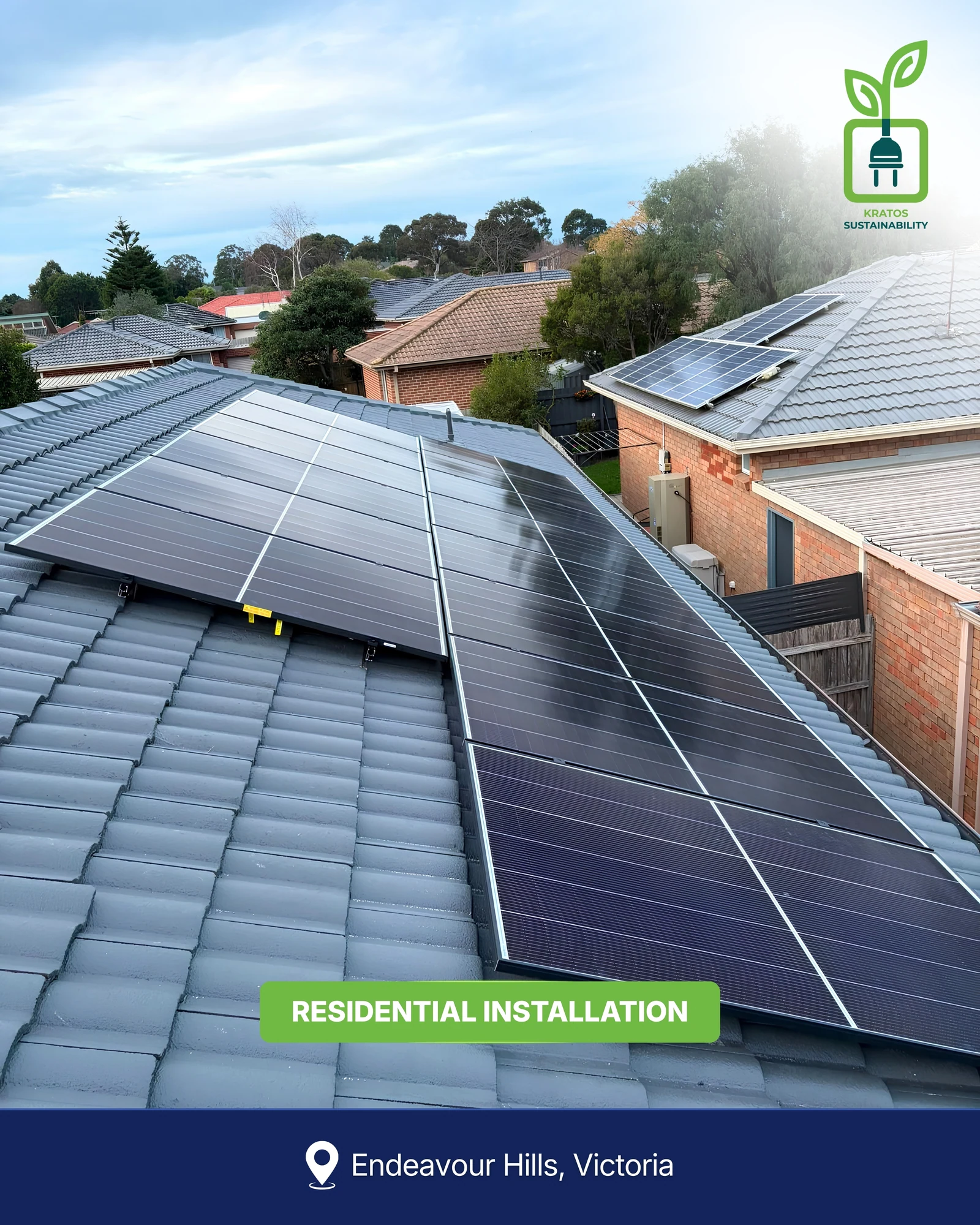
Solar systems we have installed
Every install below is a real Kratos job, with the suburb and month it was completed. As we finish work around Springwood, those projects will appear here too.
South AustraliaNov 2026
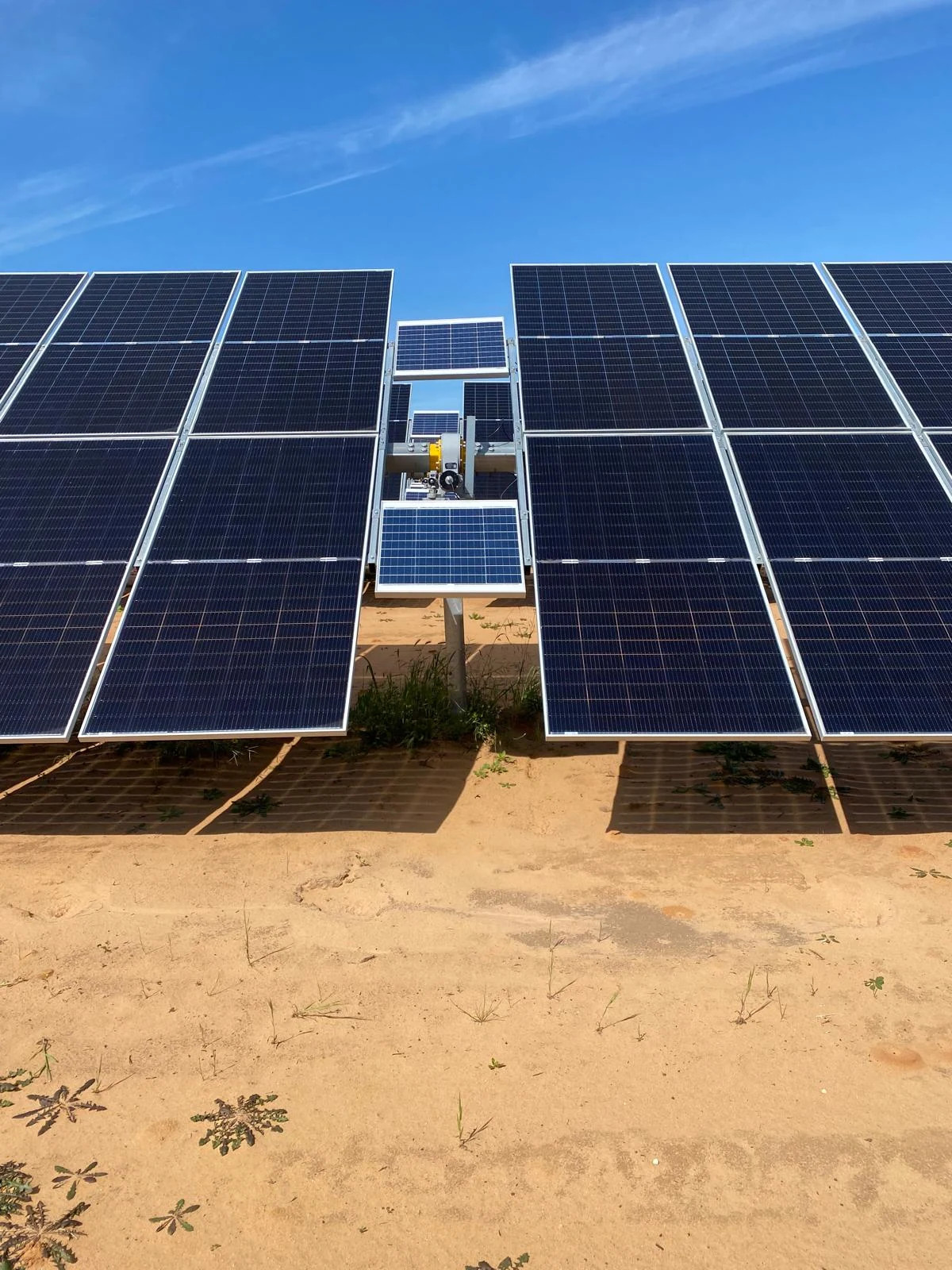
Kratos Energy’s 5 MW Solar Project in South Australia
Kratos Energy’s 5 MW solar project in South Australia showcases renewable energy infrastructure at scale. Featuring ground-mounted solar arrays and dedicated electrical infrastructure, the project forms part of our commitment to developing large-scale solar opportunities across Australia.
The project photographs offer a closer look at the installation—from rows of solar panels to the supporting structures, cabling and electrical equipment behind the system.
Project at a Glance
Project detail
Overview
Location
South Australia
Capacity
5 MW
Project category
Large-scale solar
Installation type
Ground-mounted solar photovoltaic system
Featured infrastructure
Solar arrays, mounting structures, electrical equipment and control panels
A Closer Look at the Solar Installation
The site features rows of elevated solar panels arranged across open land, with access routes between sections of the installation. Ground-mounted systems allow the array layout to be planned around the site’s terrain, available space and maintenance requirements.
The photographs also show the underside of the arrays, including structural supports and cable routing. These less-visible components are an essential part of a solar installation, alongside the panels themselves.
Dedicated electrical enclosures and control equipment highlight the infrastructure required to support a project of this scale. Together, the images provide a practical view of the engineering involved in a large-scale solar site.
Large-Scale Solar Expertise
A solar farm requires coordination across site assessment, engineering, equipment selection, construction and network requirements.
Kratos Energy’s large-scale solar services cover solar farm development, engineering and construction support, grid connection coordination, and operational support. We work with landowners, investors and commercial partners to assess opportunities and progress renewable energy projects.
Explore our project portfolio to discover more of our solar and battery installations.
Discuss Your Next Solar Project
Have land suitable for solar development, a commercial energy requirement or a renewable energy project in mind?
Contact Kratos Energy to discuss your site, objectives and potential next steps.
Call 1300 089 547
“Loved the service and the quality of the products provided. The analysis and recommendations before installation were extremely helpful. Highly recommended.”
Areed Mohammad Nur · Google review
“Informative website, excellent workmanship, and a great overall experience. Highly recommended.”
As an estimate, a 6.6kW system starts from $7,410, a 10kW system starts from $10,300 and a 13.2kW system starts from $11,250 (with battery prices starting from $4,290), with the STC discount for postcode 2777 already taken off (incl. GST for metro areas; regional areas subject to freight and travel costs). Those are starting estimates for a straightforward install, not a fixed price. On mountain blocks the usual additions are difficult access, a long cable run on a sloping site, and a switchboard upgrade on an older house.
What solar rebate can I get in Springwood (2777)?
Springwood is in STC Zone 3, rating 1.382. In 2026 a 6.6kW system creates 45 certificates, worth roughly $1,710 off the price, and a 10kW system 69 certificates, roughly $2,622. It is a discount applied at the point of sale, not a grant you apply for afterwards, and it depends on capacity and postcode only.
Is a solar system a fire risk?
A properly installed one is a very low risk, but the honest history is worth knowing because it explains why installations look different now. For years Australia was the only country in the world that required a DC isolator on the roof itself. Those switches sat in the weather taking UV, water ingress and daily thermal cycling, and they became the single largest cause of solar-related fires in this country — a safety device that turned into the hazard. The standard was revised and the rooftop isolator requirement was removed, with other measures put in its place.
So do I still need a rooftop isolator?
Not as a blanket requirement. Since the revised installation standard became mandatory on 19 May 2022, a rooftop DC isolator is no longer required where the alternative measures are used instead — a disconnection point at the array using rated connectors, together with load-break disconnection at the inverter or string protection, plus additional requirements covering where cabling runs and what signage is fitted. A new system here will normally be built that way. It is simpler, and it removes the component that was causing the fires.
My system is older than that. Should I do anything?
It is worth having looked at, and it is a cheap thing to check against what it can cost. If your system went on before the change there is very likely a plastic enclosure on your roof containing a switch that is now understood to be a weak point, and it has been sitting in Blue Mountains weather ever since. An accredited installer can inspect its condition, the seals and the enclosure, and tell you whether it needs replacing or whether the system can be reconfigured to current practice. We will do that on systems we did not install.
How do I turn my solar off in an emergency?
You switch off the solar supply main switch at your switchboard, and that stops the system feeding the house and the grid. What it does not do — and this is the part worth understanding properly — is make the panels safe. A panel generates whenever daylight falls on it, regardless of what is switched anywhere, so the cabling between the array and the isolation point can remain live. That is not a reason for alarm; it is the reason your system has signage telling anyone who arrives exactly that, and the reason the labels are not decoration.
What would a fire crew want to find at my house?
Three things, all of which are part of a compliant install and none of which cost extra. Signage at the switchboard and at the inverter saying a solar array is present and where it is isolated. An isolation point that is reachable and obvious rather than behind something. And documentation that states what is installed and where it runs. The fourth is yours rather than ours: keep that paperwork somewhere another person could find it, because in the situation where it matters you may not be the one looking.
Does having solar change anything about living on bushfire-prone land?
Rooftop solar on a house does not generally change the planning position, and it is not treated as a reason you cannot have a system. What does get thought about on a bushfire-prone block is the detail of the installation — how the array sits relative to gutters and valleys, that roof penetrations are properly sealed, and that isolation points are where someone can reach them. Our Engadine page goes through that side of it, written for the edge of the national park but the same reasoning applies up here.
Who approves a solar connection in Springwood?
The distribution network that owns the poles and wires in your street approves it — not your retailer — and we lodge the application for you. That network also decides how much your system may export: on a flexible export connection, eligible customers can send up to 10kW per phase back to the grid most of the time, while a fixed export limit caps exports at 1.5kW. On a mountain block the other thing worth settling early is the run from the house to any second building, because the distance is the variable here rather than the panels.
We install across Hawkesbury and Blue Mountains and the wider NSW service area, including Winmalee, Valley Heights, Sun Valley, Yellow Rock, Hawkesbury Heights.