
How Much Do Solar Panels Cost in Wollongong? 2026 Prices by Size
6.6kW from about $3,990, 10kW about $5,490 and 13.2kW about $7,990 after the rebate. What each size suits, and the five extras that move a Wollongong quote.
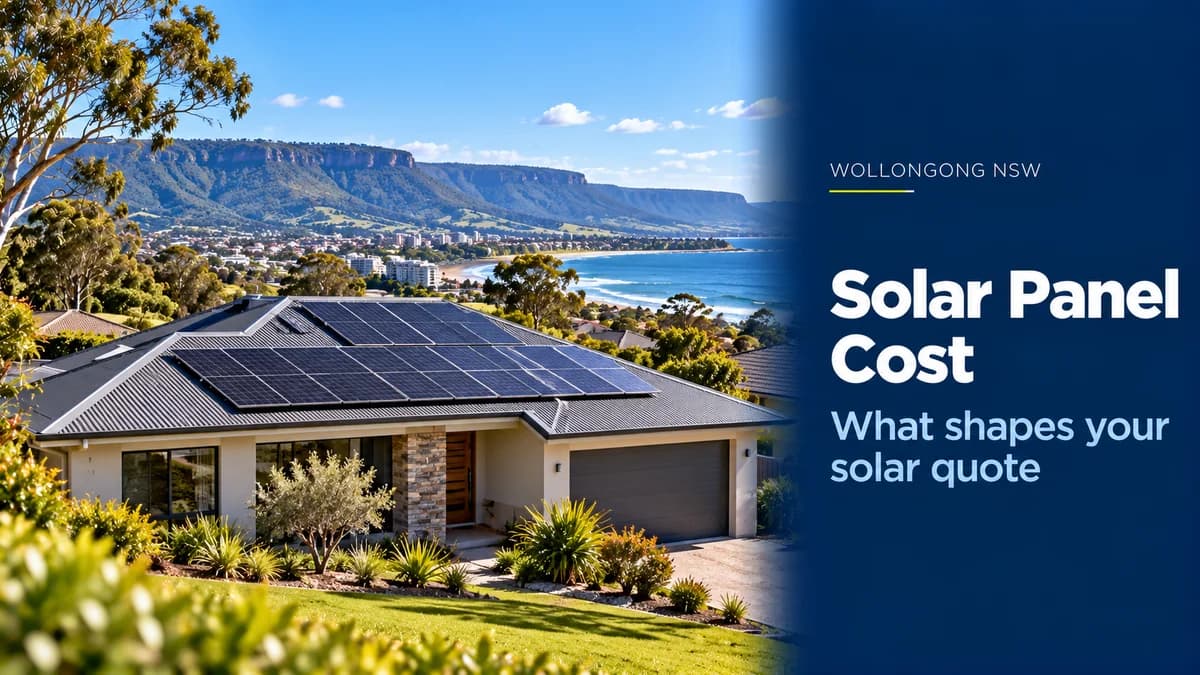
A 6.6kW solar system in Wollongong costs about $3,990 installed in 2026, with the federal rebate already taken off. A 10kW system is about $5,490 and a 13.2kW system about $7,990. Those are the figures for a straightforward job. This guide explains what each size gets you, what the rebate is worth in postcode 2500, and the five things that move a Wollongong quote above the headline price.
The short answer
System | Panels | Price after STC discount | STC discount (2026) | Typical output |
|---|---|---|---|---|
6.6kW | 14 × 475W | about $3,990 | 45 certificates, about $1,710 | about 27 kWh a day |
10kW | 21 × 475W | about $5,490 | 69 certificates, about $2,622 | about 41 kWh a day |
13.2kW | 27 × 475W | about $7,990 | 91 certificates, about $3,458 | about 54 kWh a day |
Prices are estimates for a straightforward installation, including GST, with the federal STC discount for a Wollongong postcode already deducted. Output figures use a Sydney-region average of 4.1 kWh per kW per day, which is close for the Illawarra but not a local measurement. Your quote is built from your own roof. You can see exactly what is in each one on the 6.6kW, 10kW and 13.2kW package pages, and what changes across the city on our Wollongong solar installation page.
What the rebate is worth in Wollongong
The federal solar rebate is not a cheque. It is a discount at the point of sale, worked out in small-scale technology certificates (STCs). The number of certificates is the system size, times your zone's rating, times the years left in the scheme.
Every Wollongong and Illawarra postcode is in STC zone 3, rating 1.382, the same as Sydney. Living south of the city costs you nothing in rebate terms. For a system installed in 2026 there are five deeming years left, so a 6.6kW system creates 45 certificates. At $38 a certificate that is about $1,710 off the price.
Two things to know. The certificate price moves with the market, so treat these figures as close rather than exact; the solar rebate calculator runs the numbers for your postcode. And the discount shrinks every January as the scheme winds down to 2030, so the same system costs a little more each year you wait.
Which size suits a Wollongong home
Start from how much power you use and when, not from the number of bedrooms.
6.6kW suits most homes using 16 to 25 kWh a day on single-phase power. It is the most-sold size in Australia because a 5kW inverter can carry 6.6kW of panels under the certificate rules, not because it matches anyone's bill.
10kW suits homes with ducted air conditioning, a pool, someone home during the day, or a battery planned within a few years.
13.2kW suits larger households, all-electric homes and anyone adding an EV. On single-phase power it is the practical ceiling.
If you are unsure, the solar system size calculator builds your daily use from the appliances you actually run and suggests a size.
Five things that move a Wollongong quote
The package price covers a straightforward job. These are the extras we see most across the Illawarra, and each one should be its own line on any quote you get.
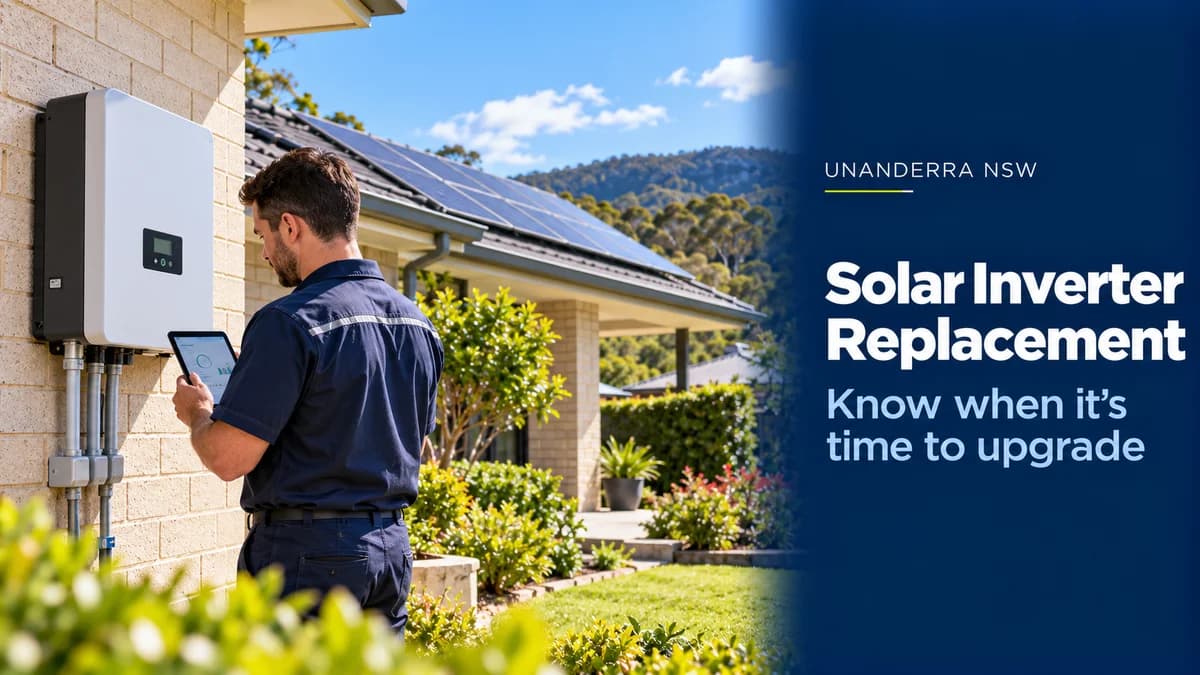
1. A steep or two-storey roof
Roof work where a fall is possible needs edge protection or scaffold. On a two-storey house in Mount Saint Thomas or a steep block in Cordeaux Heights, that is equipment on site for the whole job. We explain what it involves on our Unanderra and Cordeaux Heights page.
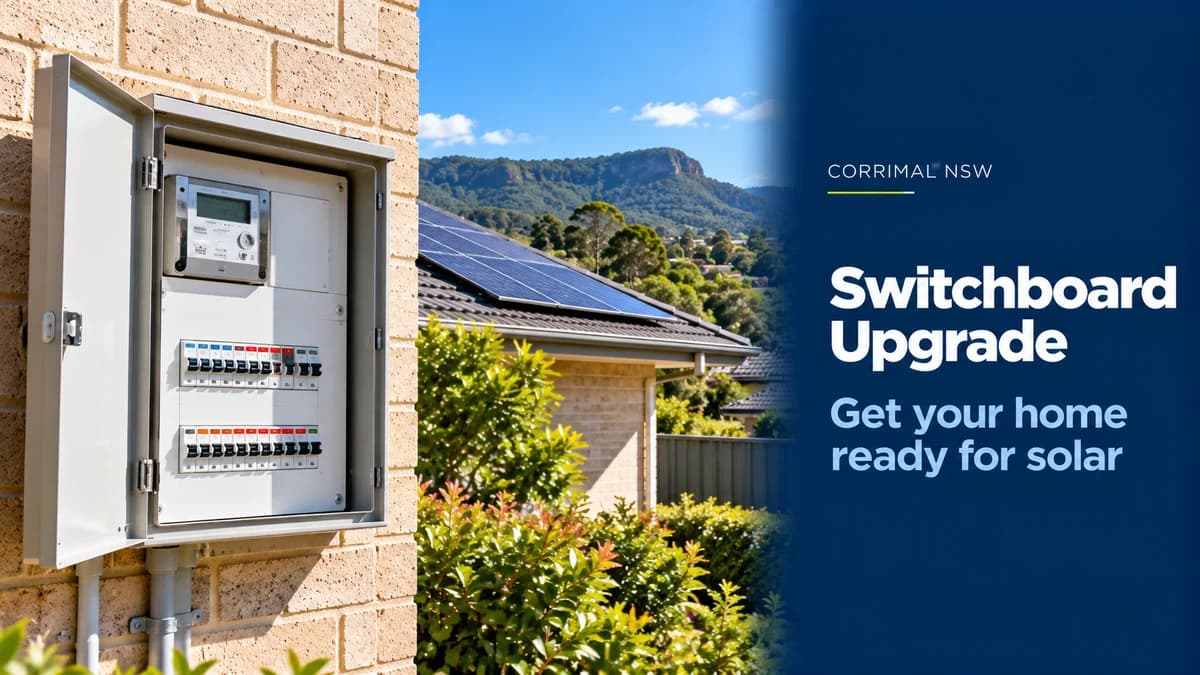
2. An older switchboard
A board with ceramic fuses and no safety switches has to be brought up to the current wiring rules before solar is connected. It is common in older suburbs such as Corrimal and West Wollongong. Our Corrimal page explains what to look for, and our switchboard upgrade guide goes through the work step by step.
3. Coastal-grade mounting
On beachfront streets in North Wollongong, Towradgi or Bellambi, the rails, clamps and fasteners spend 25 years in salt air. Coastal-grade hardware costs little extra at installation and a lot more if it fails later. Our Illawarra salt and corrosion guide lists the questions to ask.
4. Panels across several roof faces
Hip roofs on sloping blocks often give you two or three usable faces. Each face needs its own inverter input, and the extra cabling is a small cost. Our Figtree page shows how a split array should appear on a quote.
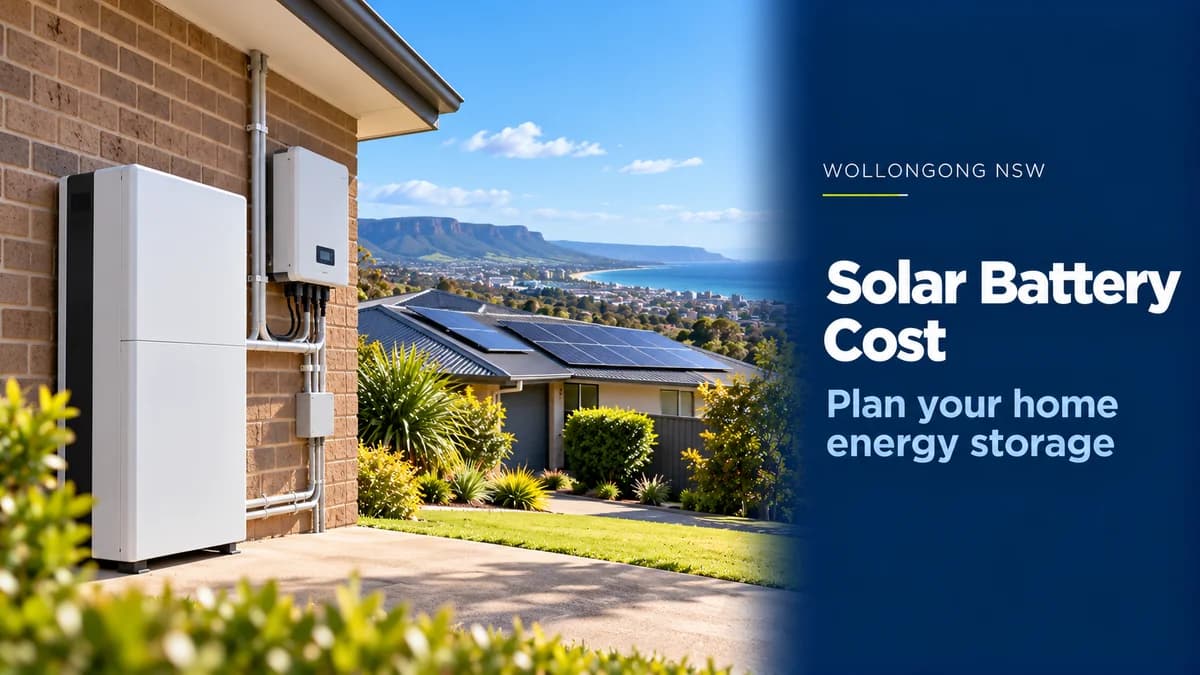
5. A battery-ready inverter
If a battery is likely in the next few years, a hybrid inverter now avoids replacing the inverter later. It costs more up front and less overall. See our guide to solar battery costs in Wollongong.
What a system is worth each year
A kilowatt-hour you use at home is worth far more than one you export. On our NSW modelling figures, power from the grid costs about 32c a kilowatt-hour and exported solar earns about 5c. So the value of a system depends mostly on how much of its output you use yourself.
Share of solar you use yourself | Typical household | Value per year, 6.6kW |
|---|---|---|
30% | Out all day, most use in the evening | about $1,294 |
50% | Someone home part of the day, pool pump on a timer | about $1,827 |
70% | Home during the day, or a battery storing the surplus | about $2,361 |
Against a 6.6kW price of about $3,990, that is a simple payback of roughly two to three years on these assumptions. Your tariff, your usage pattern and your roof will move it. Our Dapto solar payback worked example walks through every assumption for an Illawarra home, and the solar savings calculator runs it for yours.
Connection rules in the Illawarra
The distribution network that owns the poles and wires approves every new connection, and we lodge the application for you. On a flexible export connection, eligible homes can send up to 10kW per phase to the grid most of the time; a fixed export limit caps exports at 1.5kW. From November 2026, flexible exports become the default for eligible new and upgraded systems, and they need an internet-connected inverter that meets the CSIP-AUS standard. Check that any inverter you are quoted meets it. Our Illawarra solar guide covers the network rules in more detail.
Common questions
How much is a 6.6kW solar system in Wollongong?
About $3,990 installed in 2026, including GST and with the federal STC discount of about $1,710 already taken off. That is for a straightforward installation. Access, switchboard work or coastal-grade hardware can add to it, and each should appear as a separate line.
How much is a 13kW solar system in Wollongong?
Our 13.2kW system is about $7,990 after the STC discount of about $3,458. It uses 27 panels and a 10kW inverter, and on single-phase power it is the largest system most homes can connect.
Is solar cheaper in Wollongong than in Sydney?
The rebate is the same, because both are in STC zone 3. Installed prices are similar too. What differs is the job: coastal exposure, the escarpment and older housing stock change what a particular roof needs.
Do I need council approval for solar in Wollongong?
For rooftop solar on a house, usually not. Most systems are exempt development in NSW. Heritage-listed houses and homes in heritage conservation areas are treated differently and should be checked first, which we do before quoting.
How long does installation take?
Most home systems are installed in a day. Approval from the network usually comes before that, and switchboard work or scaffolding can add time. We confirm the timeline in the quote.
Get a price for your roof
The solar system size calculator gives you a matched system and an estimate in about two minutes. If you would rather talk it through, our office is on the Innovation Campus at North Wollongong, and the assessment is free. See how we install across Wollongong.
Solar System Packages
Tier 1 panels & CEC accredited installation.
- Trina 475W or Jinko panels
- 5kW power inverter
- 14 × 475W panels
- Single-phase compatible
- Trina 475W or Jinko panels
- 8–10kW power inverter
- 21 × 475W panels
- Battery & EV ready
- Trina 475W or Jinko panels
- 10kW power inverter
- 27 × 475W panels
- Three-phase compatible